Intersection 26
The project
A conference about enterprise design, designed and run with enterprise design. In front of enterprise designers. No pressure at all.
- Produce the 12th Global Conference on Enterprise Design, the first in North America, with Intersection Group.
- Model the whole event in EDGY and generate the website, the program and the campaign from it.
- Build a bilingual program: 31 sessions, 37 speakers, three days.
- Leave something that lasts once the lights go out.
At a glance
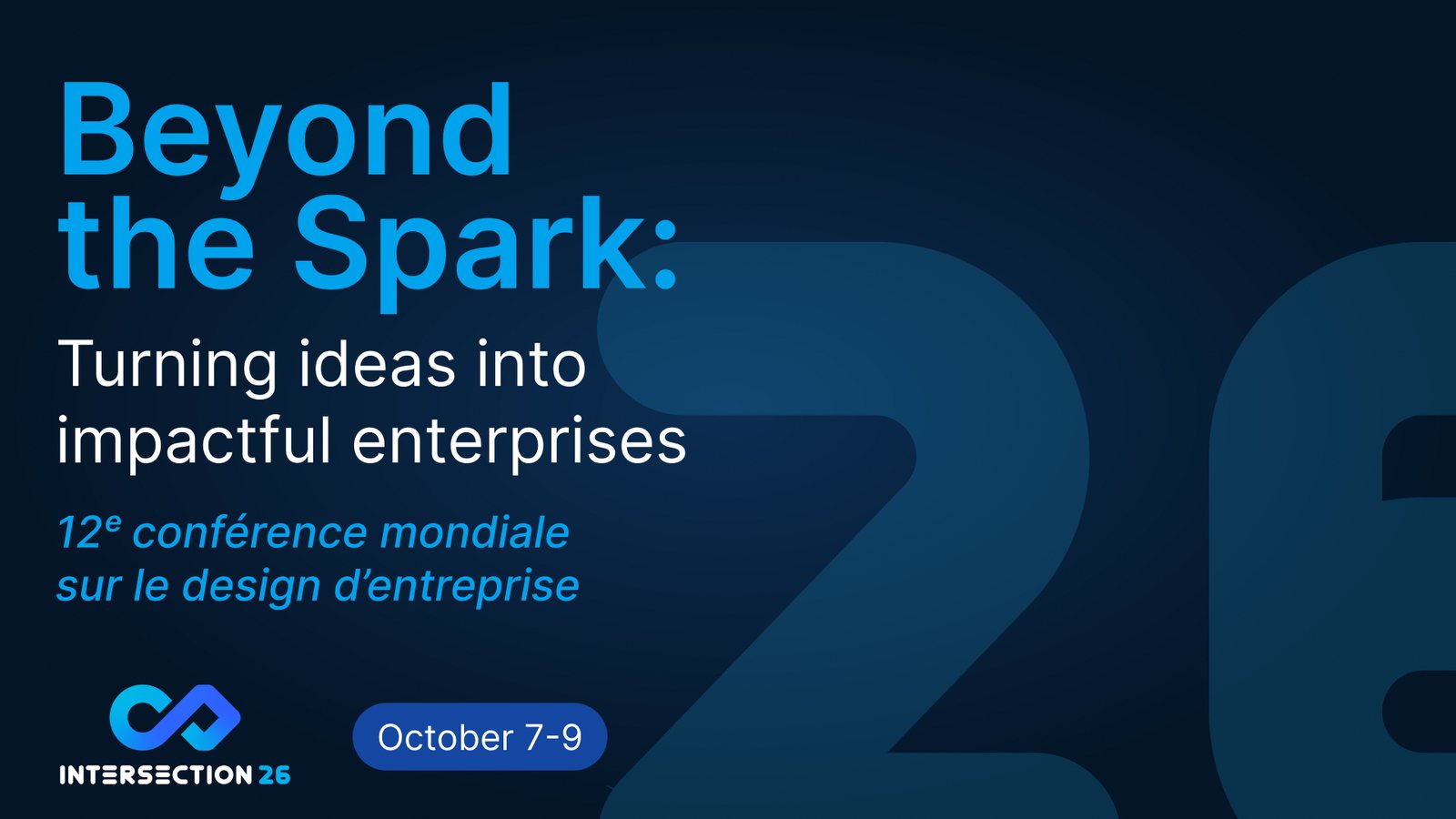
- Dates: October 7–9, 2026, after a virtual pre-conference on September 16.
- Venue: Espace Ax.C, Montréal.
- Format: two conference days, then a practitioner day of workshops and case studies.
- Program: 31 sessions on site, 37 speakers.
- Languages: English, with a full day of bilingual programming.
- Produced by: &friends, with Intersection Group.
- Website: 2026.intersectionconf.com.
A conference that takes its own medicine
Intersection 26 was the 12th Global Conference on Enterprise Design, and the first one held in North America. We produced it with Intersection Group, the non-profit that owns the conference series and publishes EDGY. Jean-Sébastien was the producer: program, website and brand. Éric handled the venue and the partners. The rest of the &friends team ran the attendee hub and the live Q&A for the three days.
The twist: we designed and ran the event with EDGY, the very language the conference is about (more on our enterprise design page). Designing an enterprise design conference in front of enterprise designers: no pressure at all.
How we did it
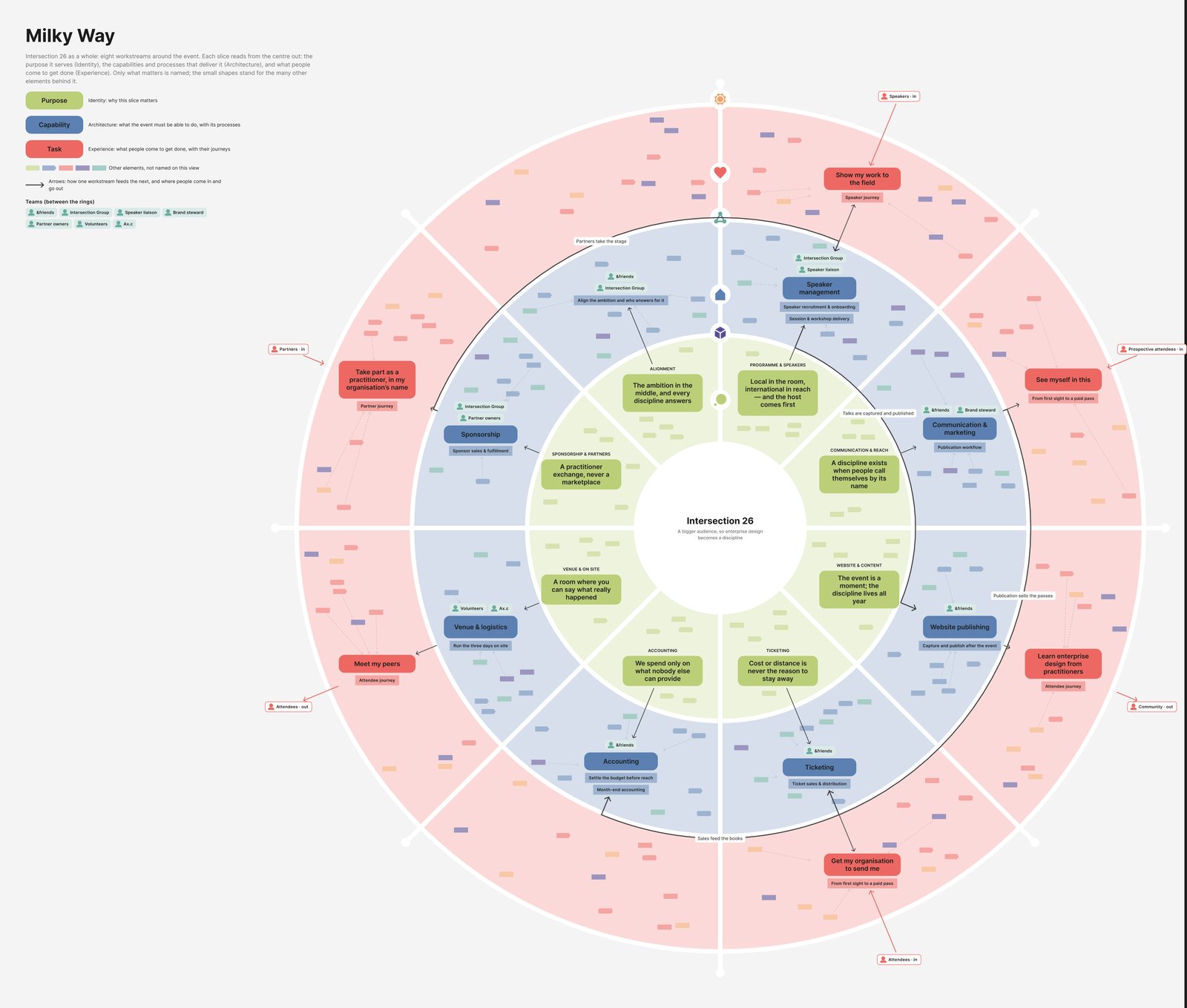
Everything started from one model, and everything came back to it.
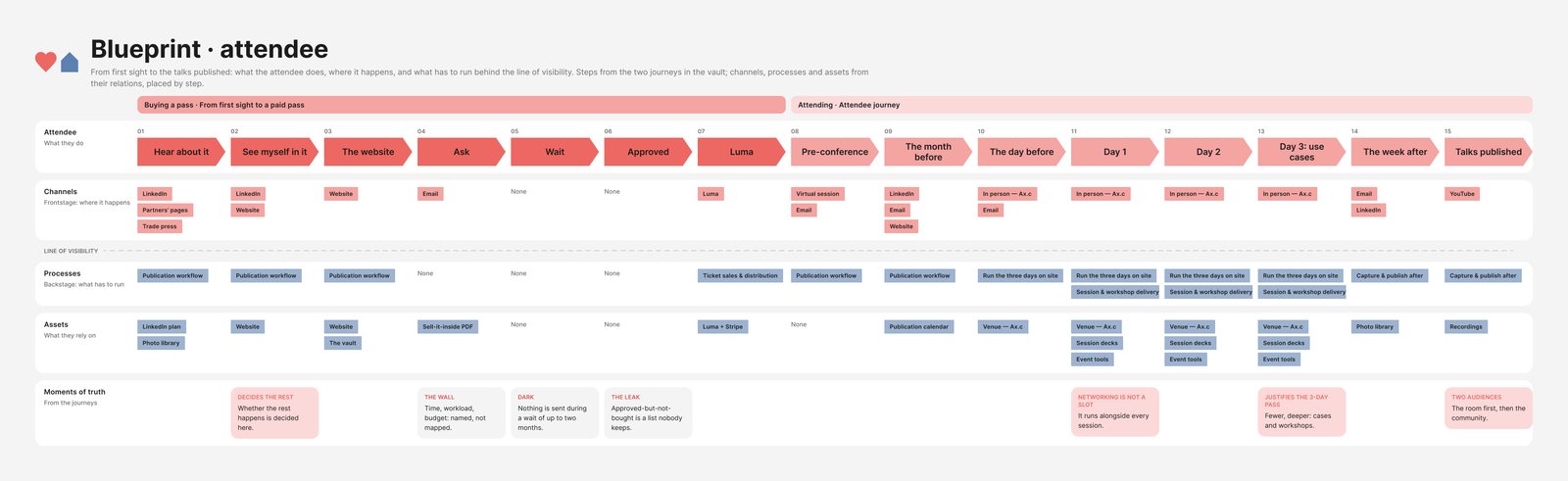
- We modeled the whole event in EDGY. Around 300 linked notes: purpose, journeys, speakers, sessions, tickets, partners, publications.
- We generated the bilingual website from that model. Copy, session and speaker cards, and partner logos all came out of the notes. Nobody maintained the site by hand.
- We built a bilingual program. 31 sessions over three days, with a French-language track on day two. The daily running orders came from the same session notes.
- We planned the LinkedIn campaign note by note. 51 posts from late August to mid-October, with a publishing calendar to keep it on track.
The campaign
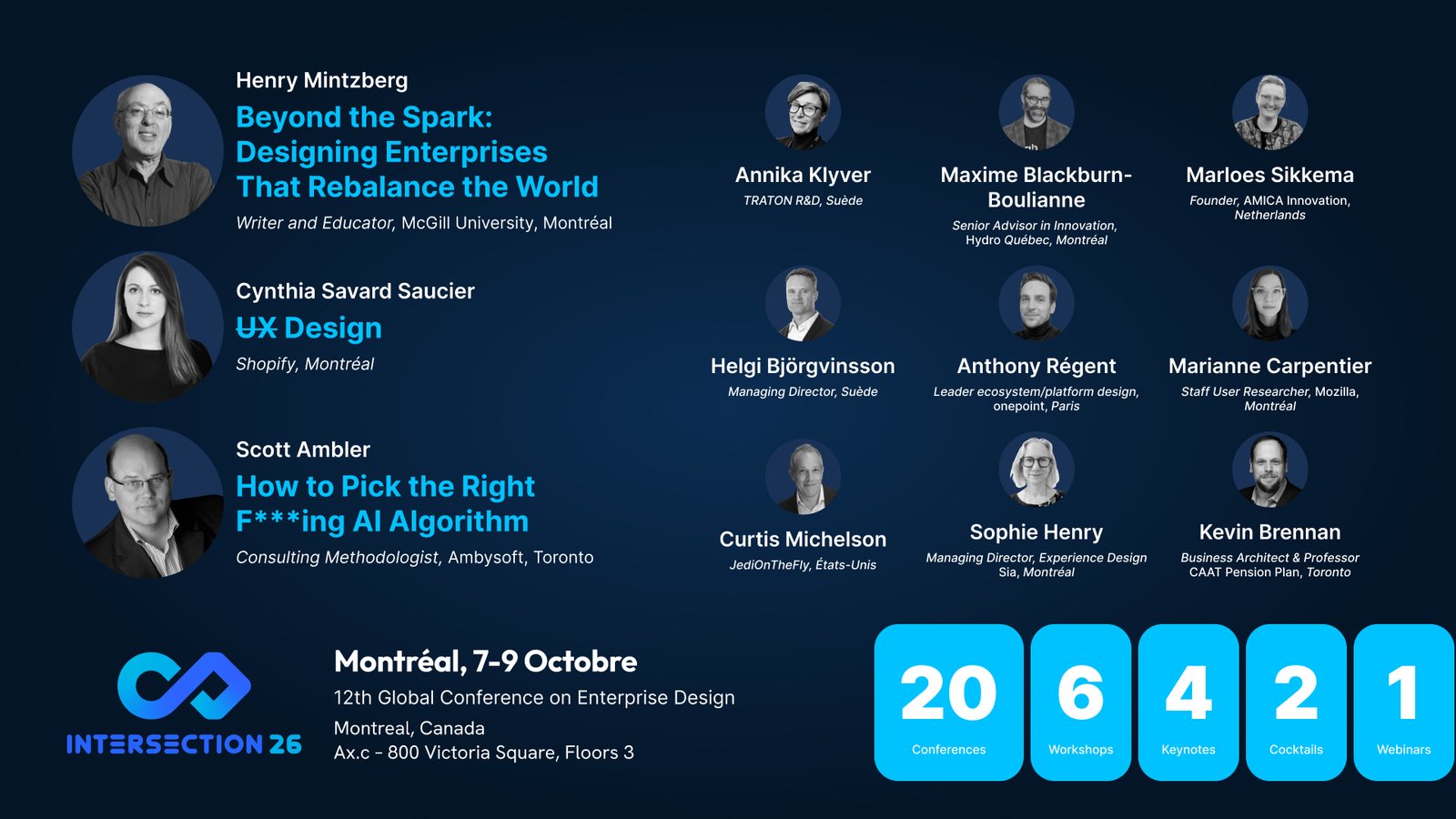
Every visual came from the same model: speakers, sessions and dates were pulled from the notes, then dropped into one Figma system.
Three principles
- A practitioner exchange, to learn with experts. No sales pitch on stage, not even a paid one. Speakers talk to peers, as peers.
- Local in the room, international in reach. The host comes first. The ambition was international. A French-language track respected the host culture instead of translating it.
- The event is a moment; the discipline lives all year. An event with no follow-up doesn’t count as a success. That’s why the talks were recorded, to be published afterwards.
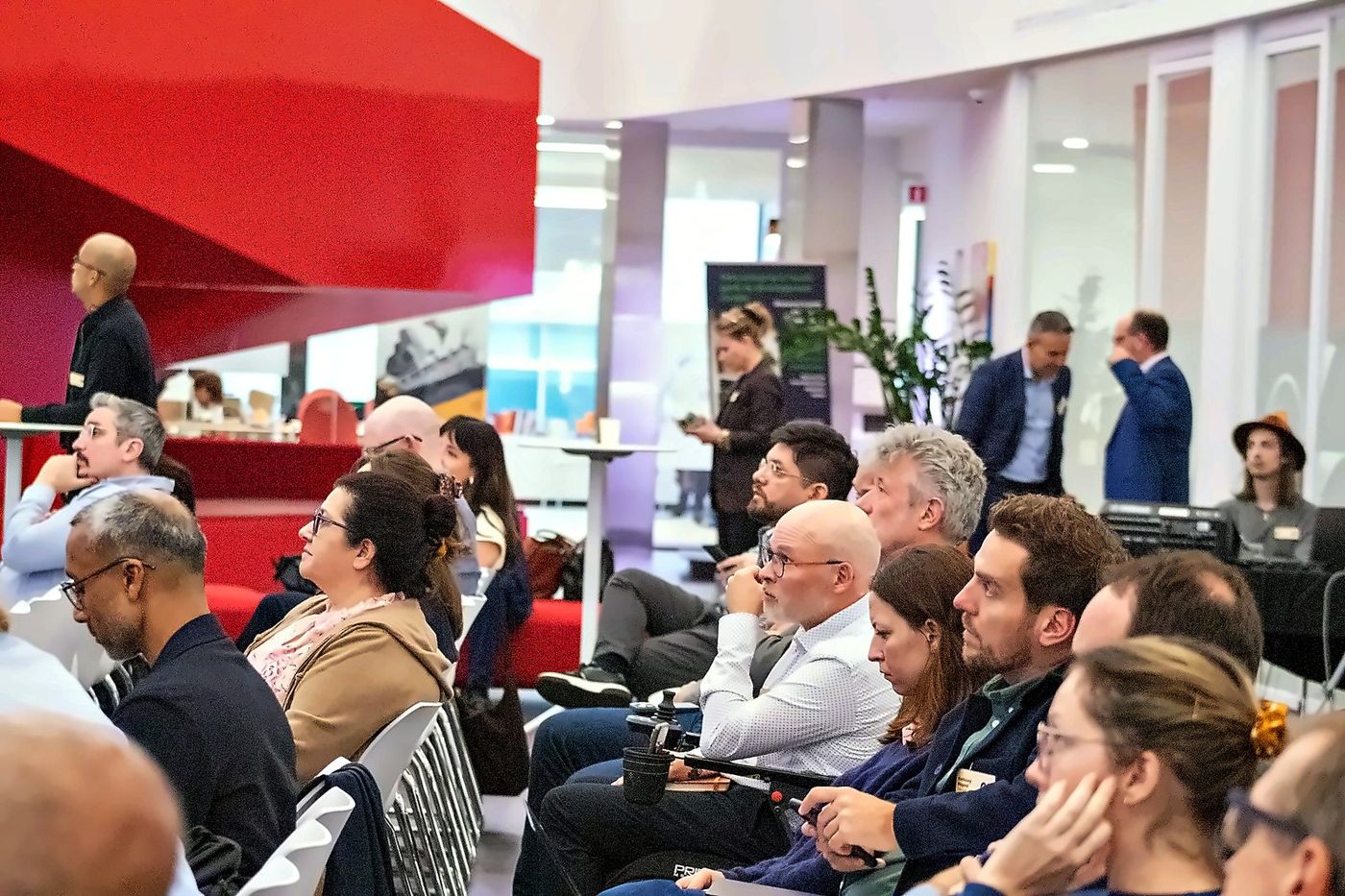
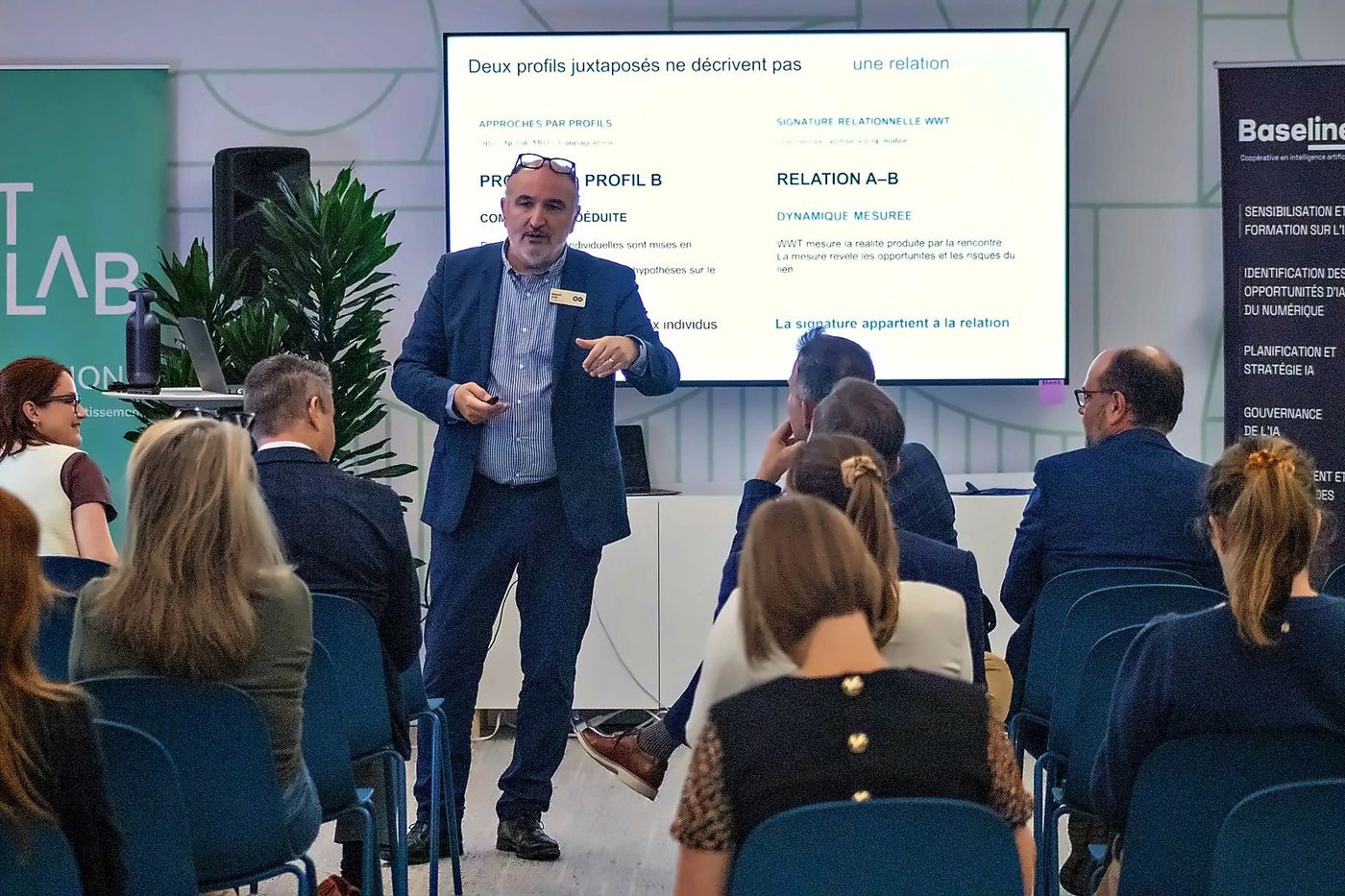
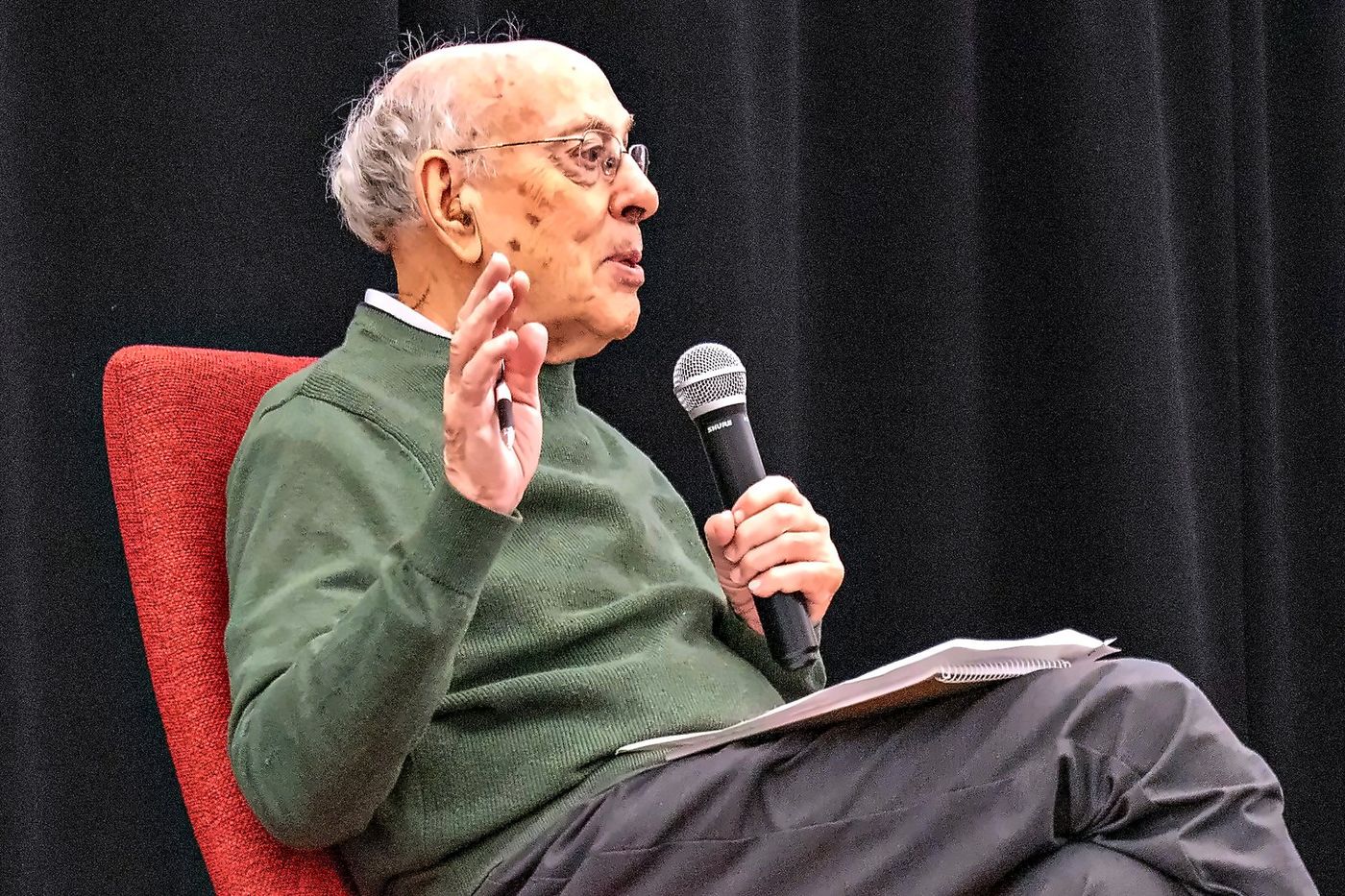
Photos: Laurent Harel.
From the model to the room
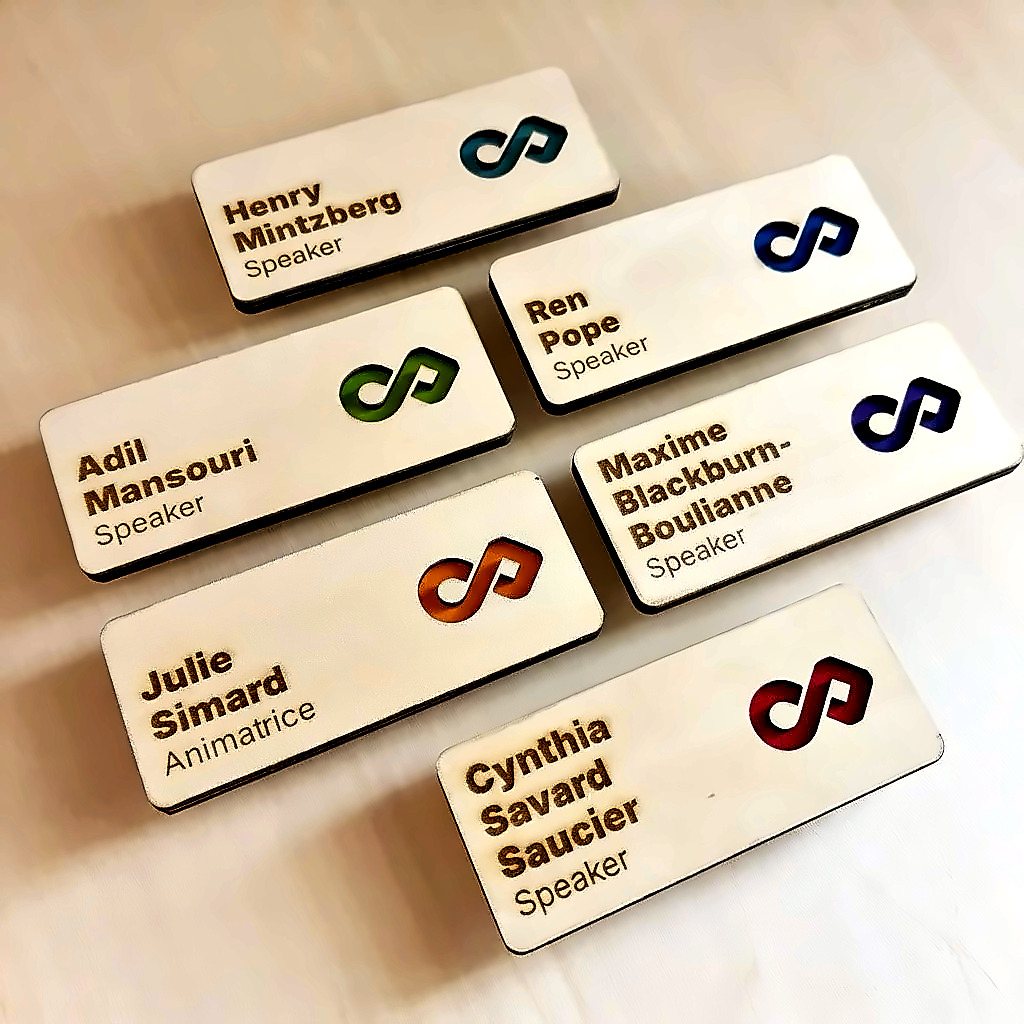
The same notes kept feeding everything downstream. For the three days themselves, the &friends team built an attendee hub on the event website: program, Wi-Fi, restaurants, questions. They also ran live Q&A for every session. Even the name badges came from the speaker list, then were laser-engraved in wood.
AI helped us survive the micro-tasks, but it was never the base: the model, the people and the partners were. We explain the mechanics on our AI page (in French).
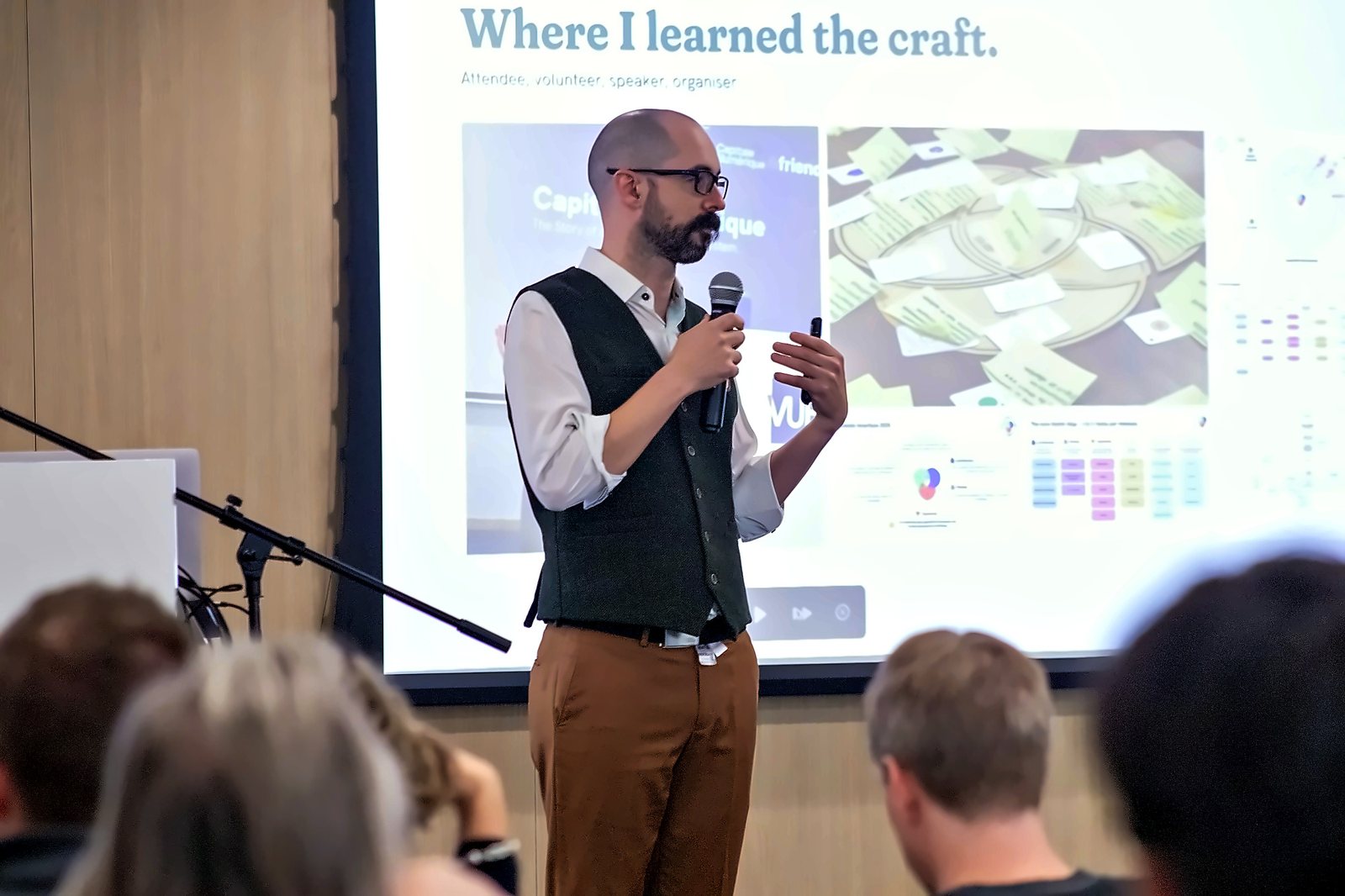
The closing talk
“You never design from nothing. You always redesign.” Jean-Sébastien closed the conference with the case of Intersection 26 itself, in four chapters: Web à Québec in 2014, the WAQ and Interface years, Intersection 25 in Brussels, and Intersection 26, which started from the EDGY model of the Brussels edition. Most people think reinventing an event means changing the venue or hiring flashier speakers. The real issue is deeper: most events run on old habits that no longer match economic reality or strategic ambition. To change the outcome, you have to break the model.
What people said
From attendees’ and speakers’ LinkedIn posts in the week after the event.
“[…] people who were so generous in sharing their experience. […] So much of the content was directly useful to the work I’m doing.”
“But what I’ll remember first is the community. […] The event ran beautifully.”
The result
A global conference delivered in Montréal by a small team, with one model that produced the website, the program, the campaign and even the badges. The tools we built for Intersection 26 are now becoming software for other events.
The team. Production: &friends (Jean-Sébastien Daigle: program, website and brand; Éric Letarte: venue and partners; the &friends team: attendee hub and live Q&A). Co-organizer and owner of the conference series: Intersection Group (presidents: Milan Guenther and Wolfgang Goebl). Brand guardian: Dennis Middeke. Photos: Laurent Harel. And thanks to the volunteers, who poured the drinks, took the photos and carried the boxes.