Palais des congrès de Montréal
The project
The Palais wanted to see the future coming. It had a new team for it, and no method yet.
- Teach strategic foresight to Cellule Nova+, the Palais’s innovation team.
- Frame its foresight program at the same time: what to watch, how far ahead to look, where to start.
- Leave a collective memory after every workshop, so the team could carry on alone.
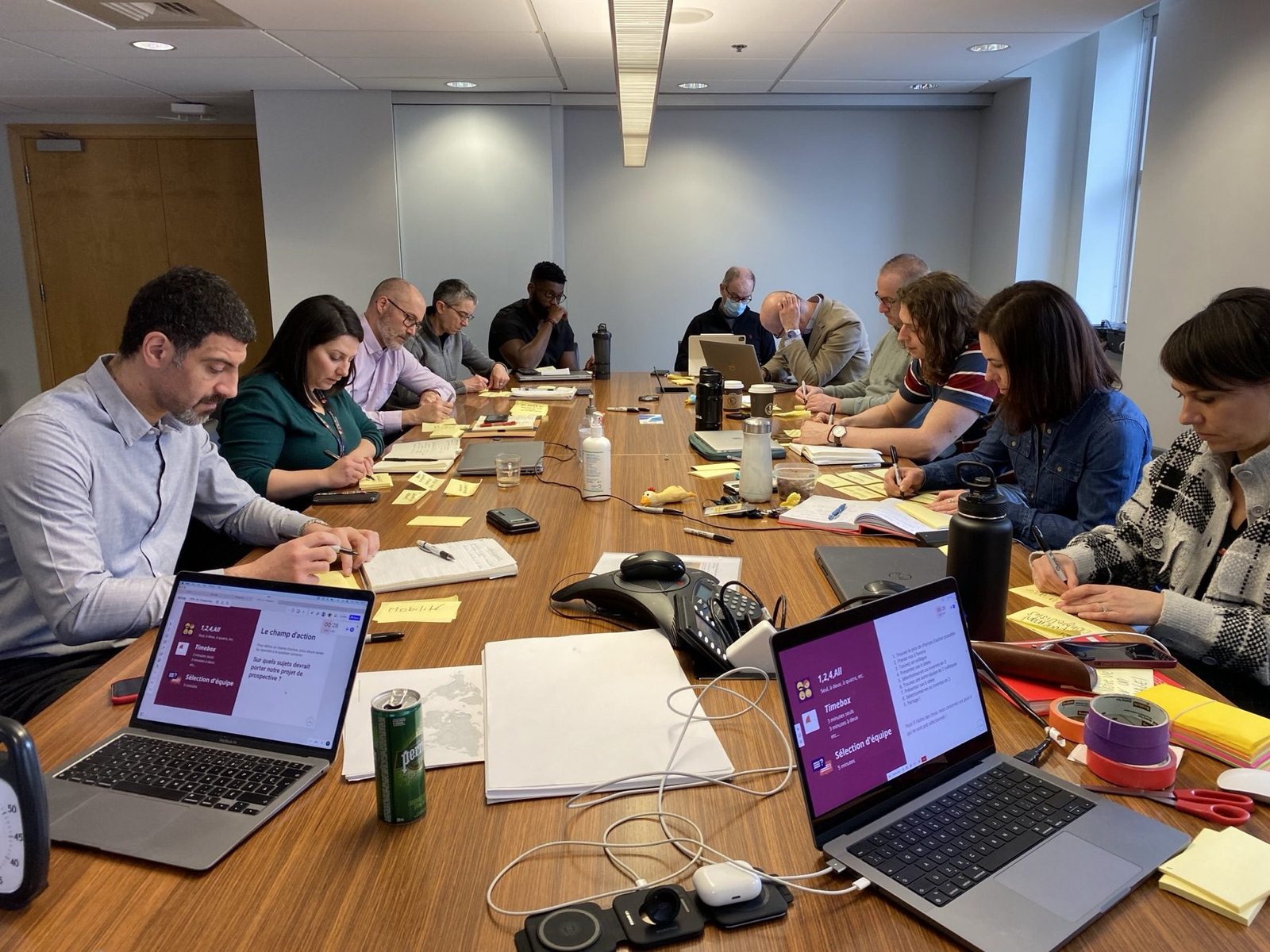
Learn it, then use it within the hour
In 2023, the Palais gave its innovation cell, Cellule Nova+, a mandate: run a strategic foresight program. The team had varied expertise and plenty of curiosity. What it didn’t have was a shared idea of what foresight is, or of what this program should watch.
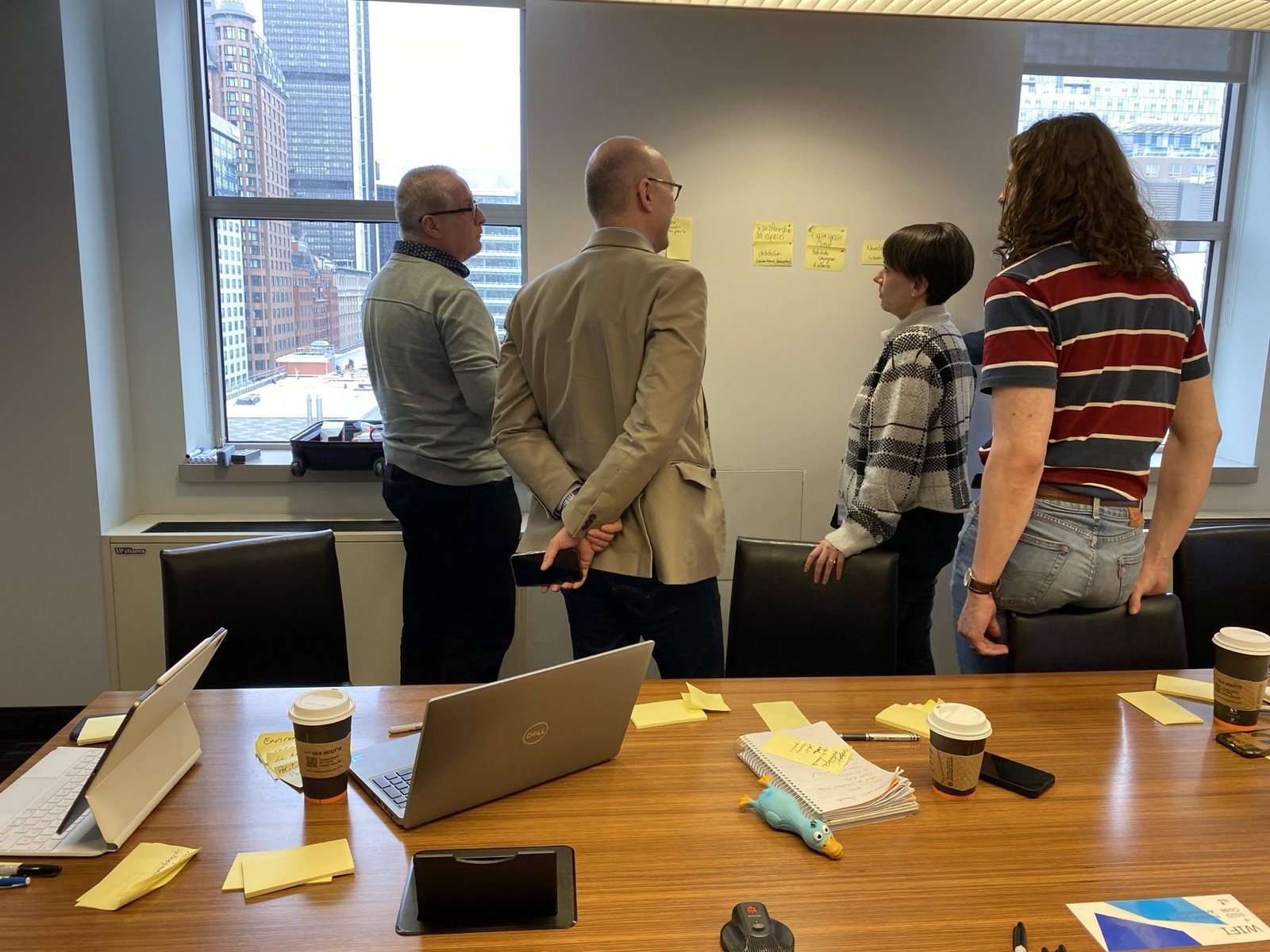
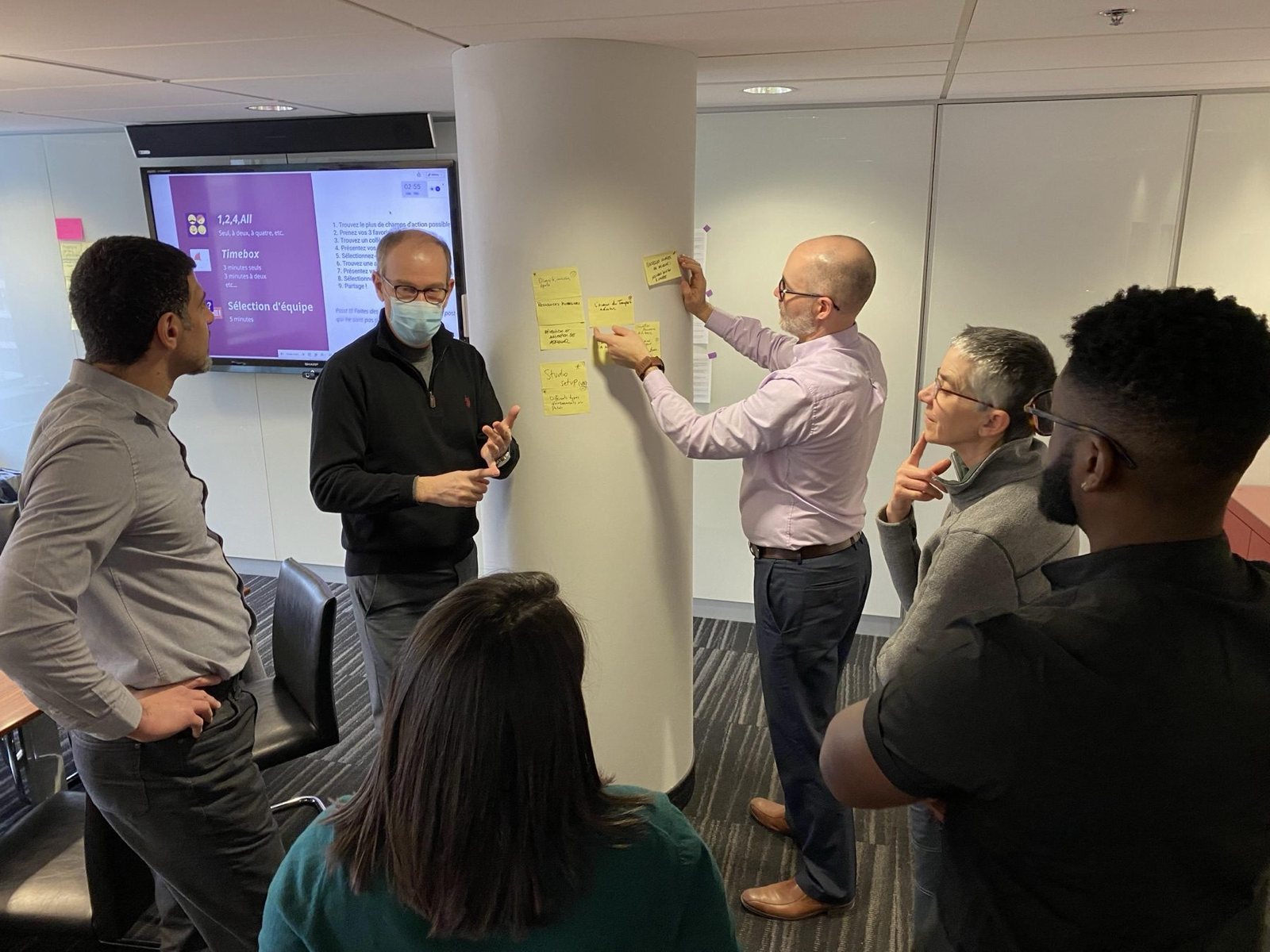
Éric led the project for &friends, and we designed and facilitated the workshops together. We chose not to teach foresight in a classroom and frame the program in a separate meeting. We did both at once. Each workshop opened with a short lesson, then put it to work on the Palais’s own reality. Every activity left one piece of the frame on the wall.
How we did it: four workshops
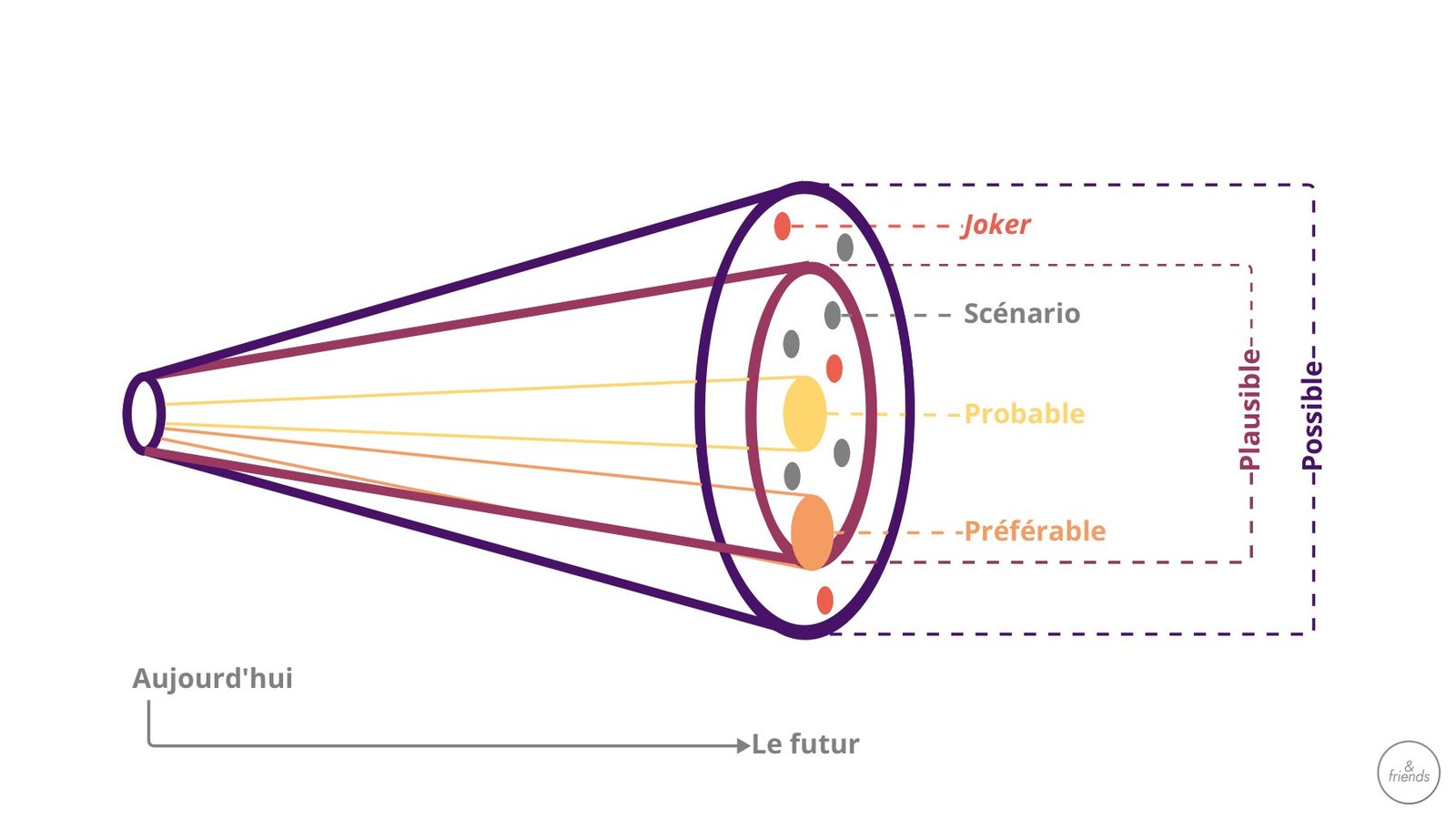
- Workshop I: Framing (April 3). Learned: what strategic foresight is, and what it isn’t. Not a crystal ball, not futurology, not a statistical forecast. The futures cone, from possible to preferable. Left with: the first choices of the program, and 20 questions for the future.
- Workshop II: Mapping (April 5). Learned: why foresight needs a map of the system, and why the map is never the territory. Left with: an internal and an external map of the Palais, merged into one ecosystem.
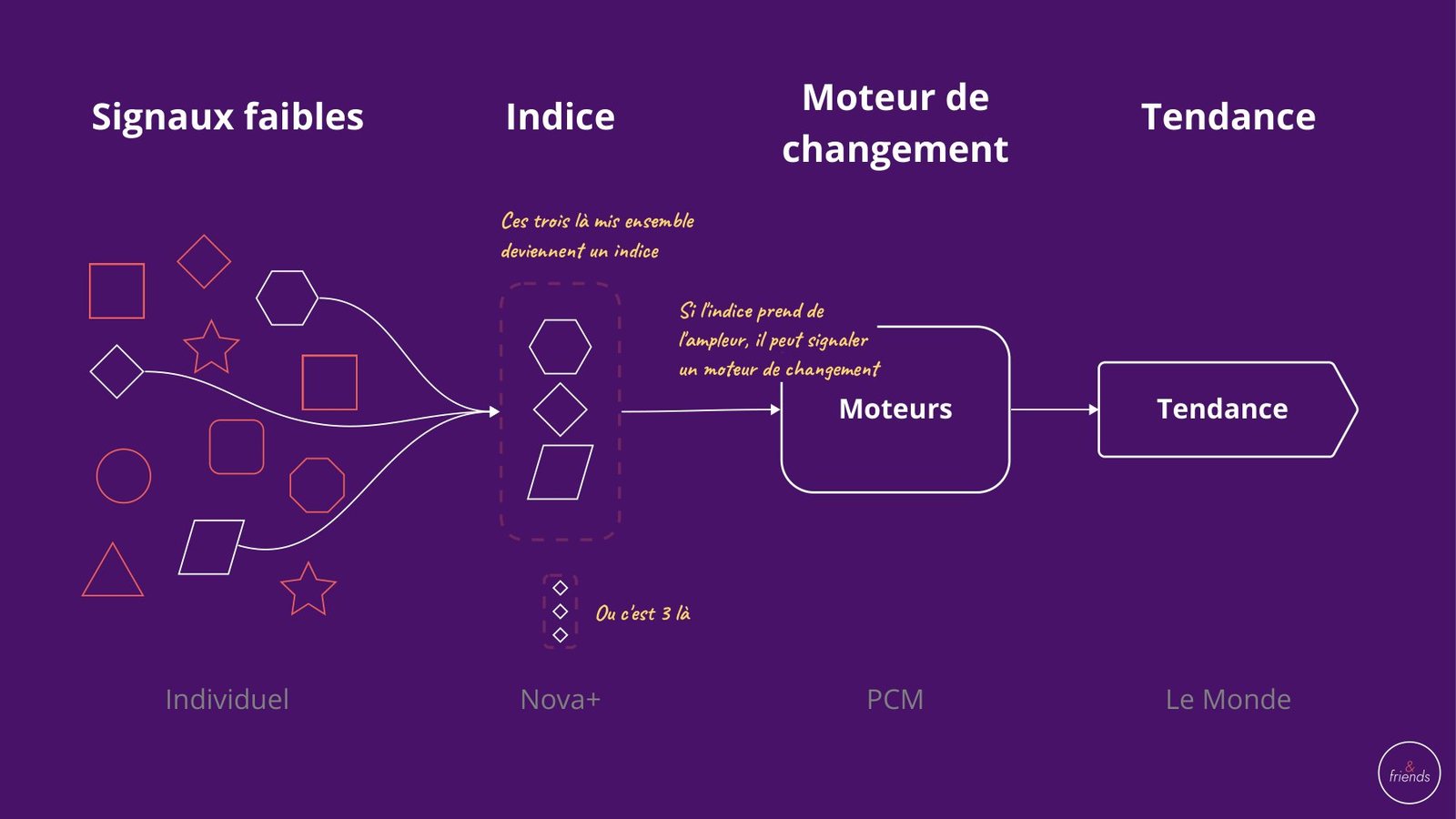
- Workshop III: Scanning (April 17). Learned: the five traits of a weak signal (novelty, surprise, challenge, significance and delay), and how signals add up to a clue, a driver, then a trend. Left with: a first harvest of weak signals and a list of sources to follow.
- Workshop IV: Reference future (April 20). Learned: a driver of change is a cause, a trend is the result you can observe, and a reference future is what happens if nothing surprising happens. Left with: a prioritized PESTEL and a first reference future of the Palais.
20 questions for the future
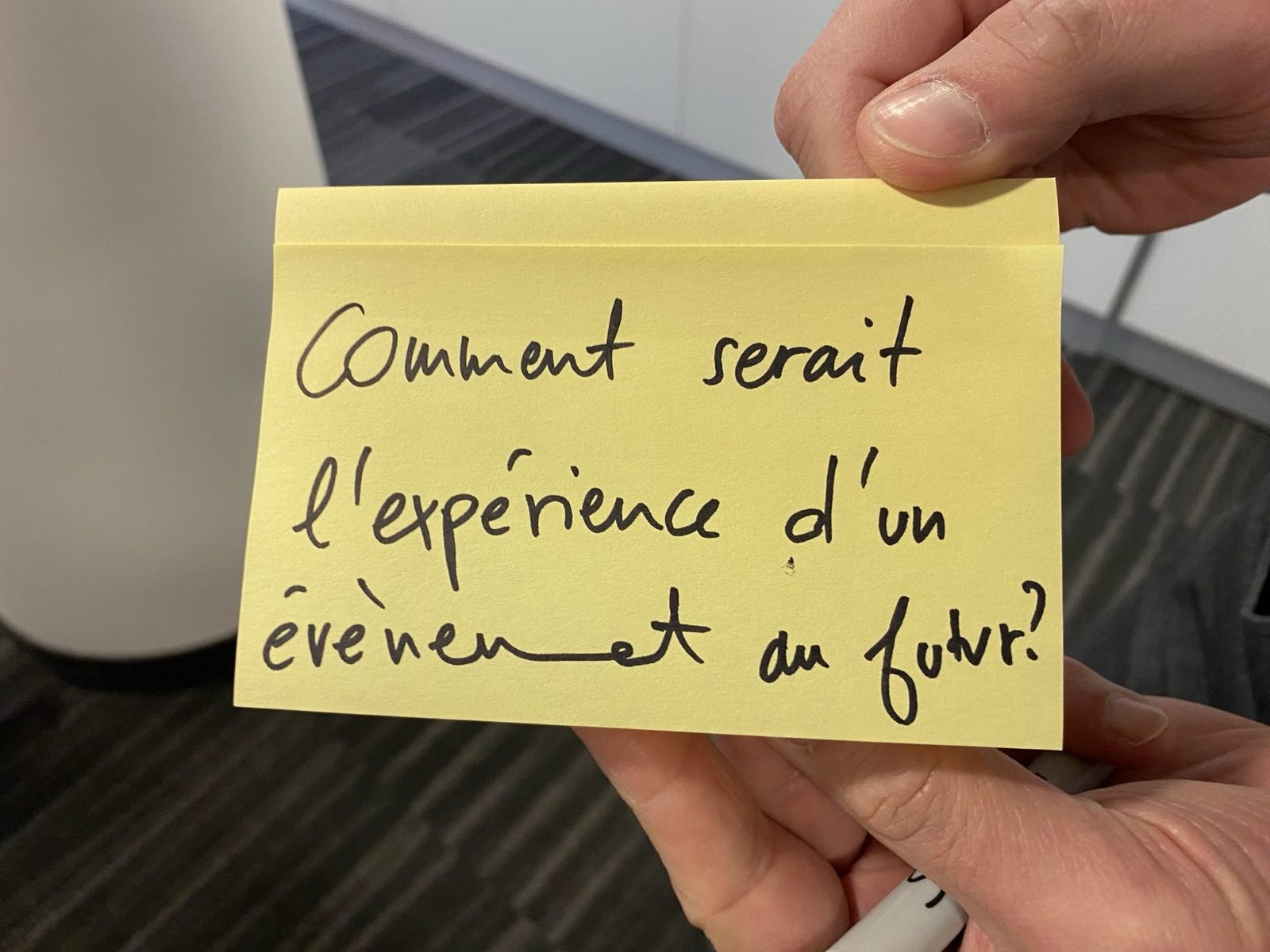
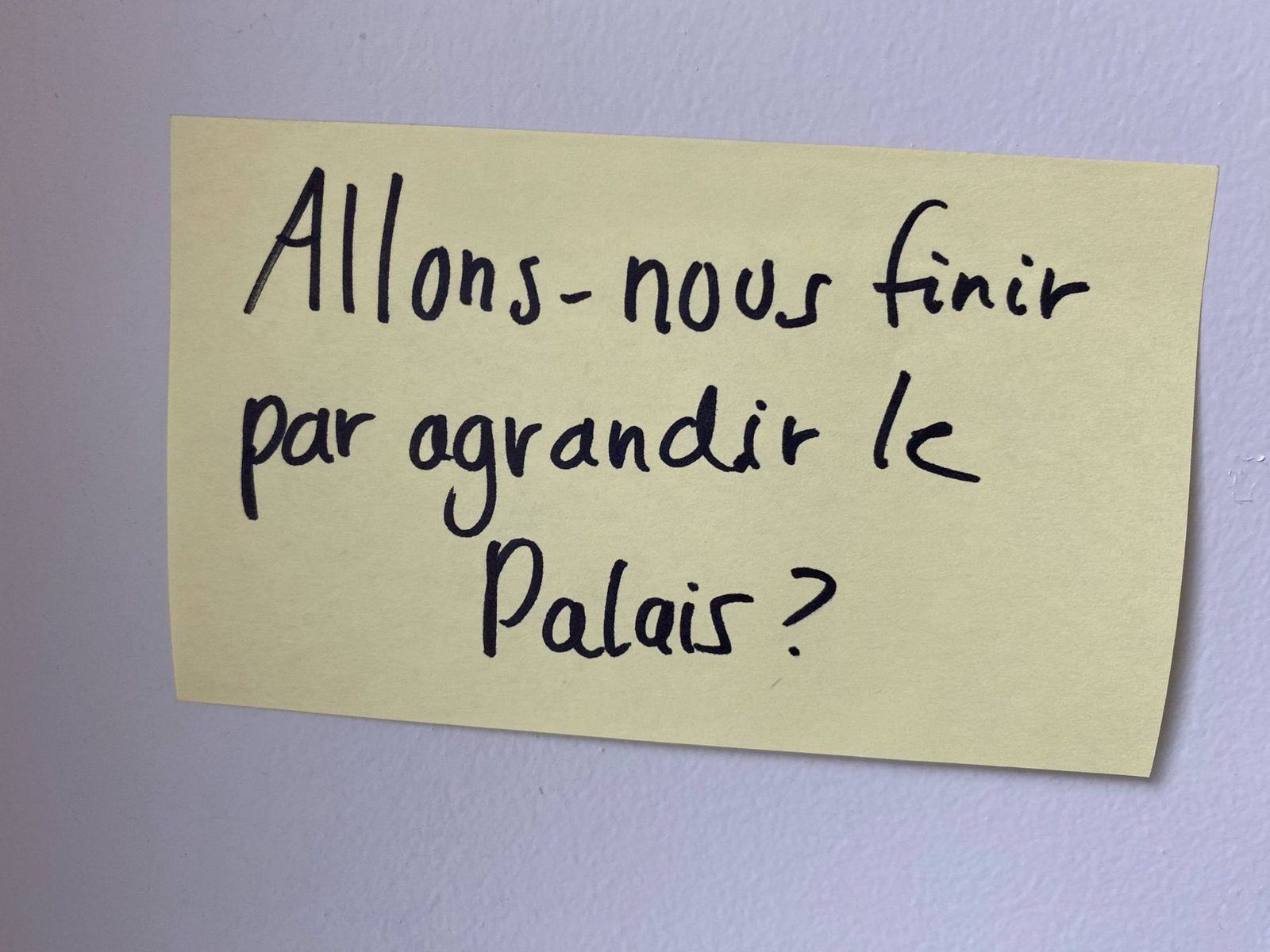
We asked the team what it wanted to know about the future, in the form of a question. Some were vast, some very concrete. A few looked for the downside of new things, which is healthy: an innovation team tends to see every novelty as good news. Remember the metaverse. A sample, translated from French:
- How will we adapt to climate change?
- What will an event feel like in the future?
- How could we react in real time to how attendees feel?
- How do we shrink the air travel of international conventions?
- Will AI drive how events come to the Palais?
- Will geopolitics hold our travellers back?
- Will events get bigger or smaller?
- Will we end up expanding the Palais?
A collective memory after every workshop
The learning didn’t stop when the workshop did. After each session, the team got a collective memory: everything it had produced, digitized, followed by our findings for what comes next and the actions to consider. Each activity became a recommendation for running the program. Among them:
- Sit next to strategy. Bring Nova+ closer to the strategic planning team, and get that team used to scenarios.
- Watch trends more than whispers. A weak signal can take five to ten years to matter. Emerging trends come first.
- Run a 2-2-1 cycle. Two years observing a trend, two years experimenting, one year evaluating and implementing.
- Start every meeting from the reference future. Check it still holds, update it, and make each scenario diverge from it.
The result
Cellule Nova+ came out of April knowing how to think about the future, with its own frame to start its first foresight initiatives. Not a report on the Palais’s future: a team able to write it itself.
The team. Project lead, workshop co-design and facilitation: Éric Letarte, &friends. Workshop co-design and facilitation: Jean-Sébastien Daigle, &friends. Client: Cellule Nova+, Palais des congrès de Montréal.