The project
For years, teachers had been building websites on their own. The result: about 30,000 of them.
- Understand what each group needs: IT, communications, school administrators, teachers, secretaries, families.
- Design an information architecture able to absorb thousands of sites into a navigable ecosystem.
- Deliver a three-year roadmap, sized for the team that would live with it.
- Make the team able to hold the course without us.
Almost one website per student
The Centre de services scolaire des Grandes-Seigneuries serves 21 municipalities on Montréal’s South Shore. Its digital presence had grown faster than its structure: no shared standards, no common architecture, and families left to find their way through it all. Almost one website per student, as if every kid had started a blog. The goal was to bring order to it in a way the organization could actually sustain.
The ecosystem, by audience:
- Families and students: one clear front door instead of thousands of school pages.
- Staff: a redesigned intranet within the wider ecosystem.
- IT teams: a technology inventory to know what exists and who owns it.
How we did it
The transformation was co-created with the CSSDGS team. The goal was simple: after our analysis and architecture, they had to be able to keep the course on their own.
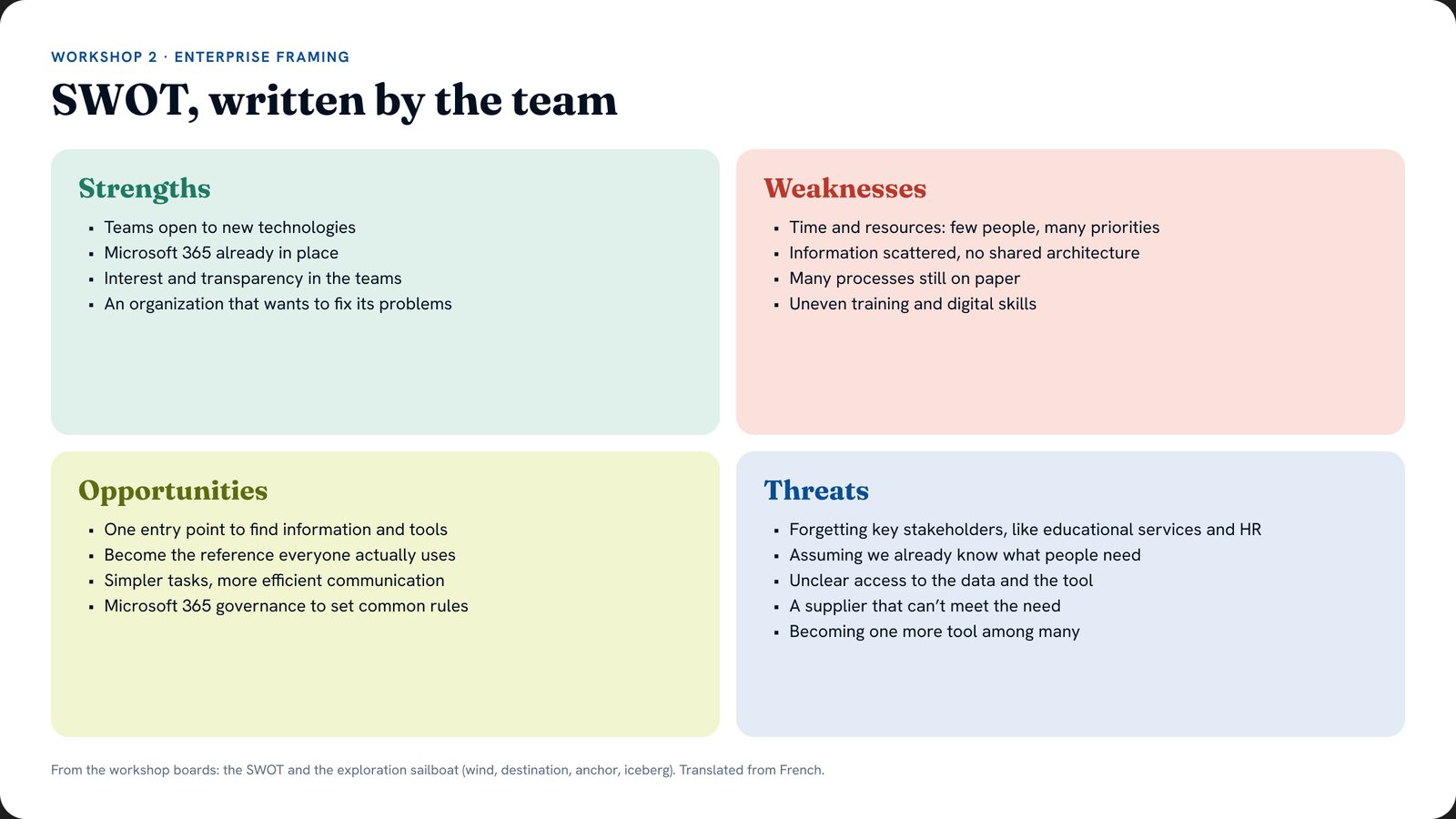
- Workshops across the organization. IT, communications, school administrators, teachers and school secretaries in the same rooms. Three workshops set the frame: a problem analysis, an enterprise framing with a SWOT and a content inventory, then alignment.
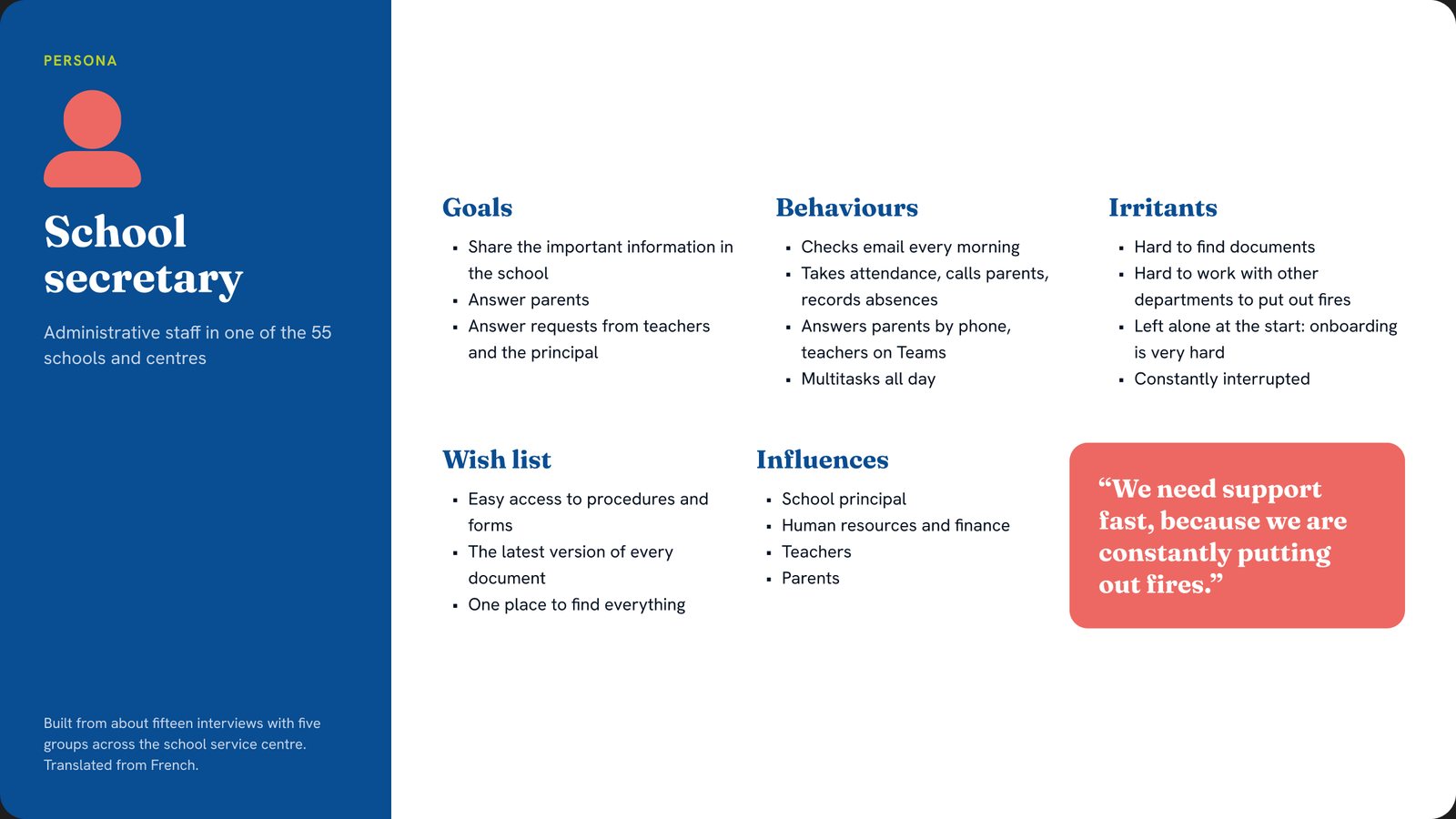
- Research, then training. About fifteen interviews across five groups, turned into personas with goals, irritants and a wish list. Plus design thinking training so the teams could carry the method themselves.
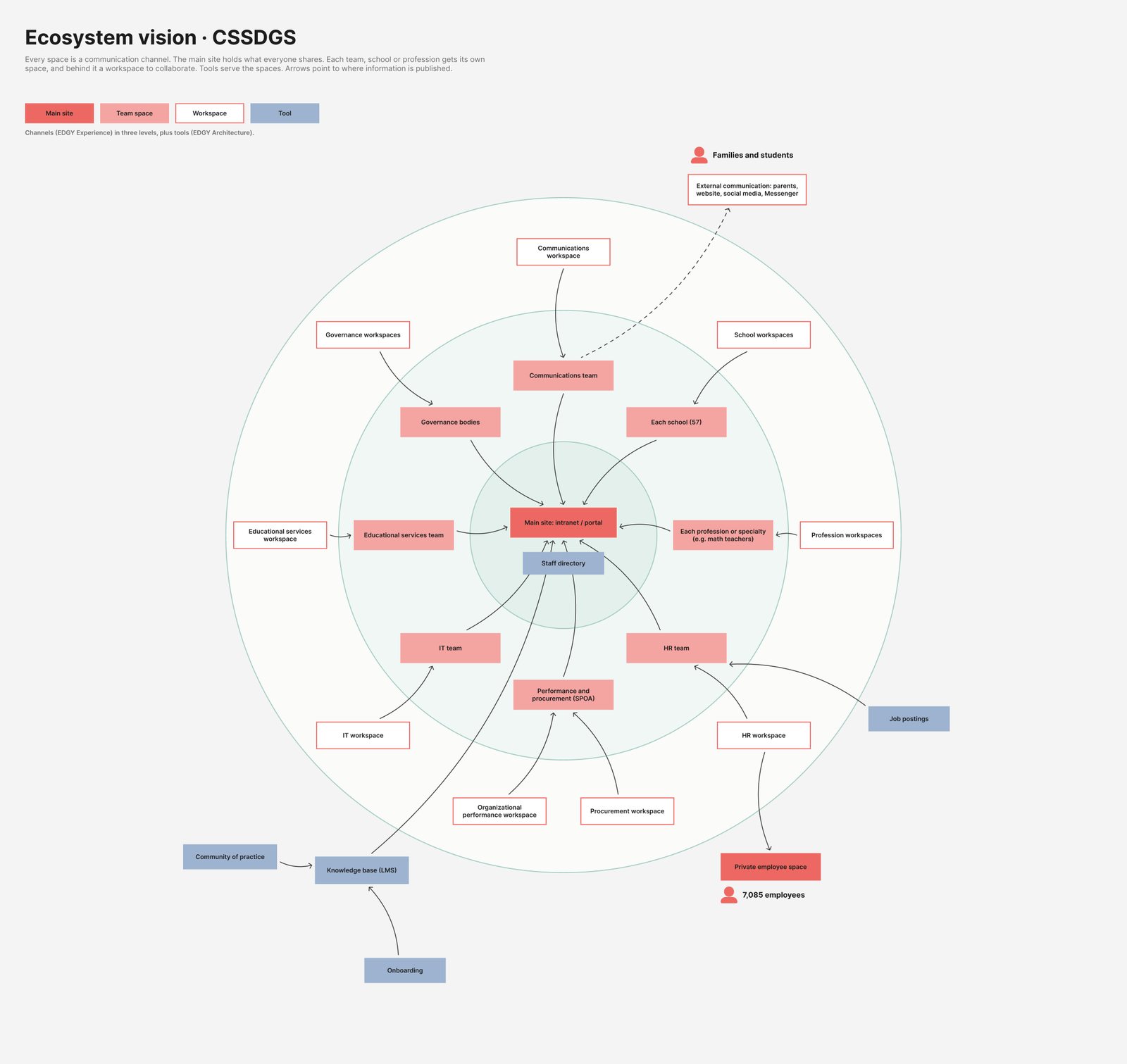
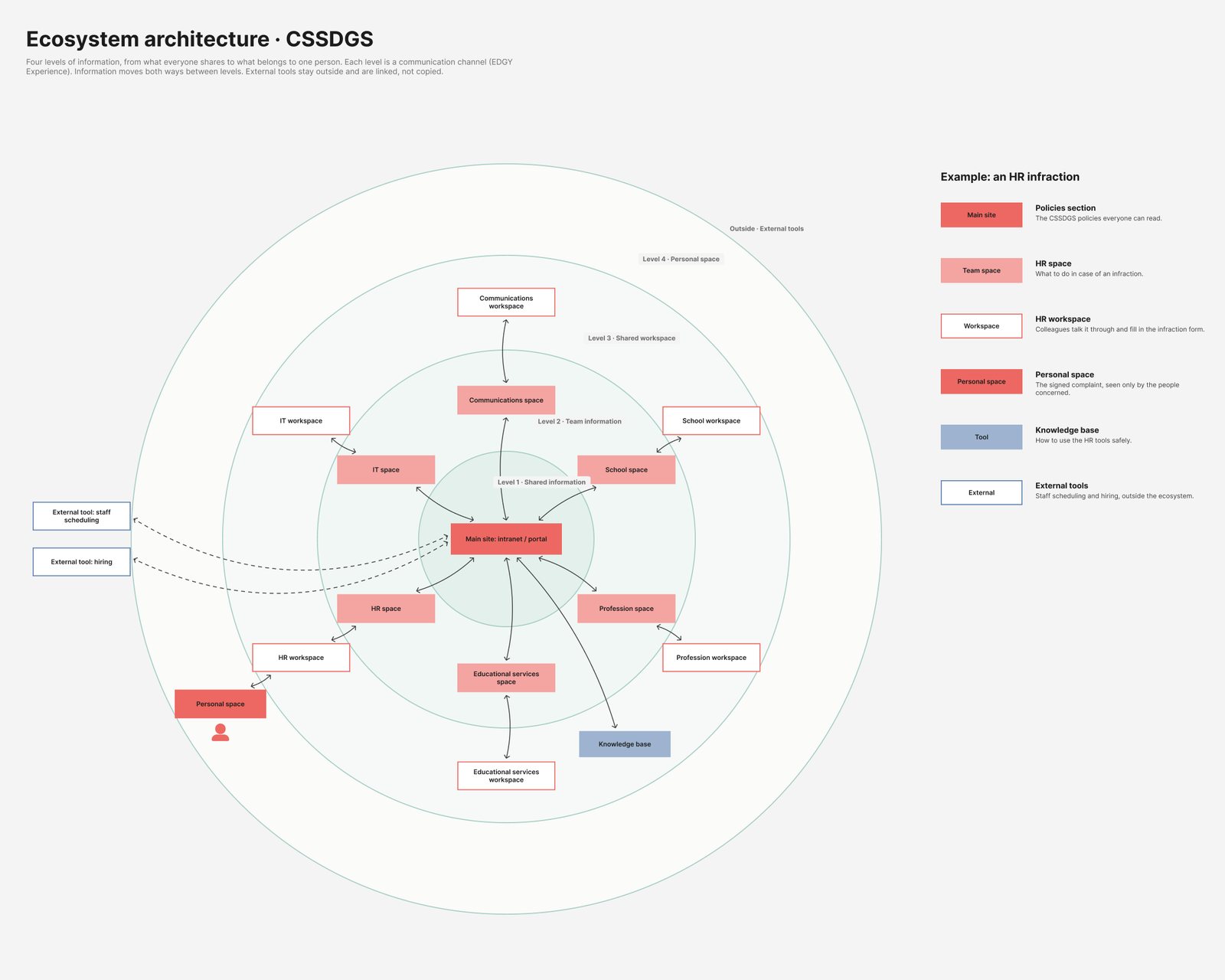
- One architecture for decades of sprawl. An information architecture able to absorb thousands of sites into a navigable ecosystem. It had to solve the problems of the people we had talked to, not the ones we imagined.
- A roadmap people could follow. Three years of priorities, sized for the team, including a technology inventory and a new intranet.
The ecosystem, drawn
What happened next
Public milestones from the CSSDGS annual reports. Their work, not ours, in the direction the roadmap pointed to:
- 2021–22: the board adopts a digital transformation plan, and 7,000 new devices go out: three years of replacements in one.
- 2022–23: Maestro, the new employee intranet, is rolled out.
- 2023–24: second phase of Maestro, which is more than most intranets get, and wider use of Microsoft 365.
- 2024–25: digital action plans continue in the schools.
The result
30,000 ungoverned websites turned into one ecosystem, with a three-year roadmap the school service centre followed on budget and on schedule. When the architecture is designed for the people who will live in it, it holds.
The team. Business analysis, UX, information architecture and facilitation: Jean-Sébastien Daigle, &friends. Client: Centre de services scolaire des Grandes-Seigneuries.