Carelancer
The project
The Uber of home care: families on one side, nurses and support workers on the other, and a platform both can trust.
- Decide what comes first in a two-sided marketplace.
- Structure the whole service: bookings, appointments, profiles, billing.
- Design the journeys, then a full design system, on desktop and mobile.
Two very different users, one flow
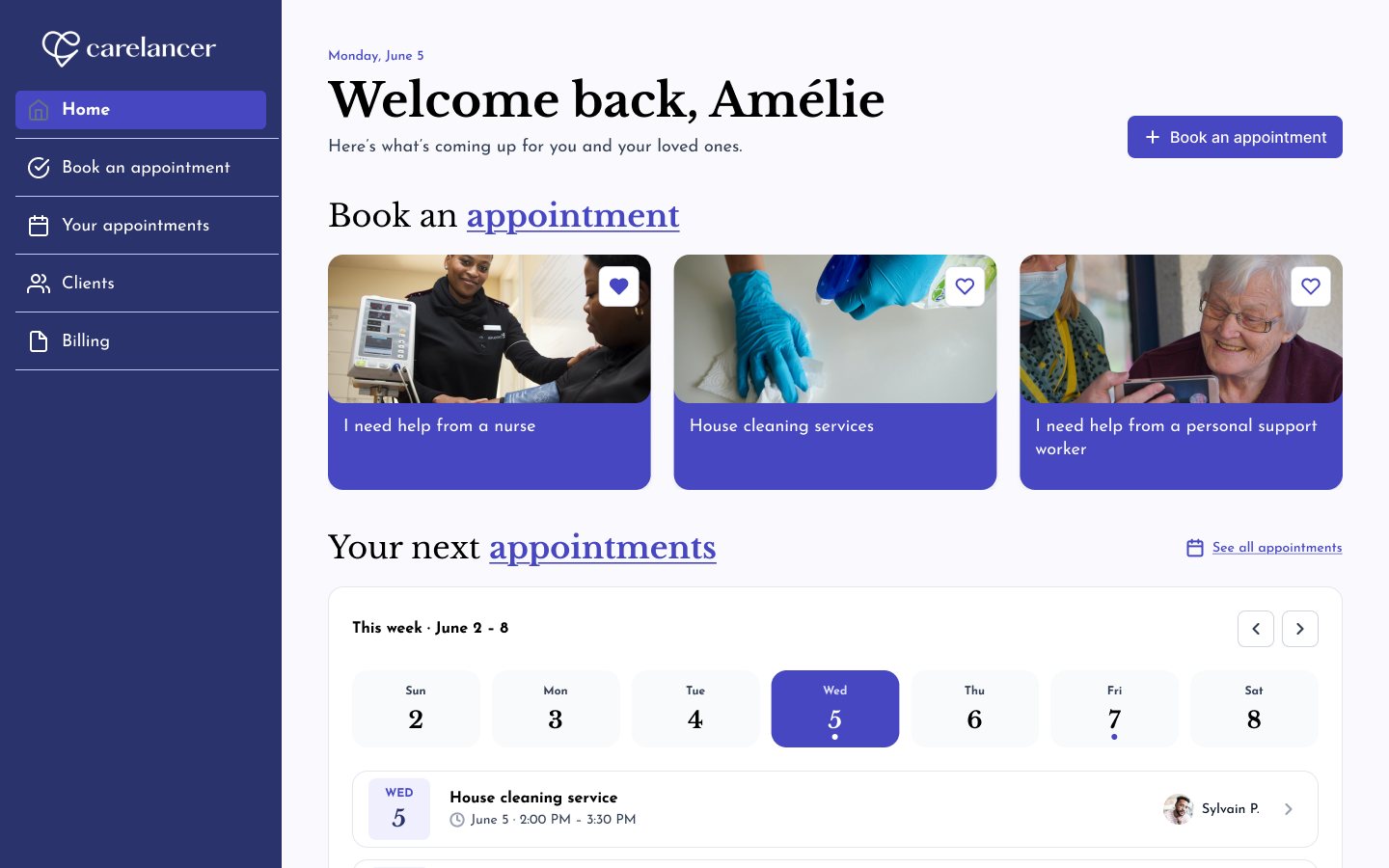
Carelancer, a Toronto startup, set out to connect nurses and personal support workers directly with the families who need them. The challenge was turning an ambitious two-sided marketplace into something simple enough for a stressed family member and a busy nurse to trust and use every day. Two very different users, one booking flow, and nobody with time to read a manual. Especially not at 11 p.m. when Mom needs help tomorrow morning.
How we did it
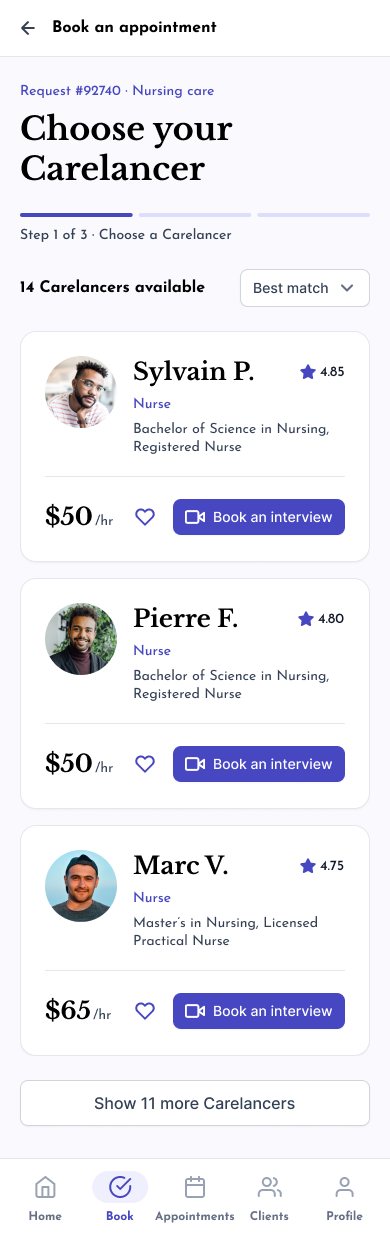
- Decide what comes first. A prioritization workshop with the founding team to choose what a two-sided care marketplace had to do on day one.
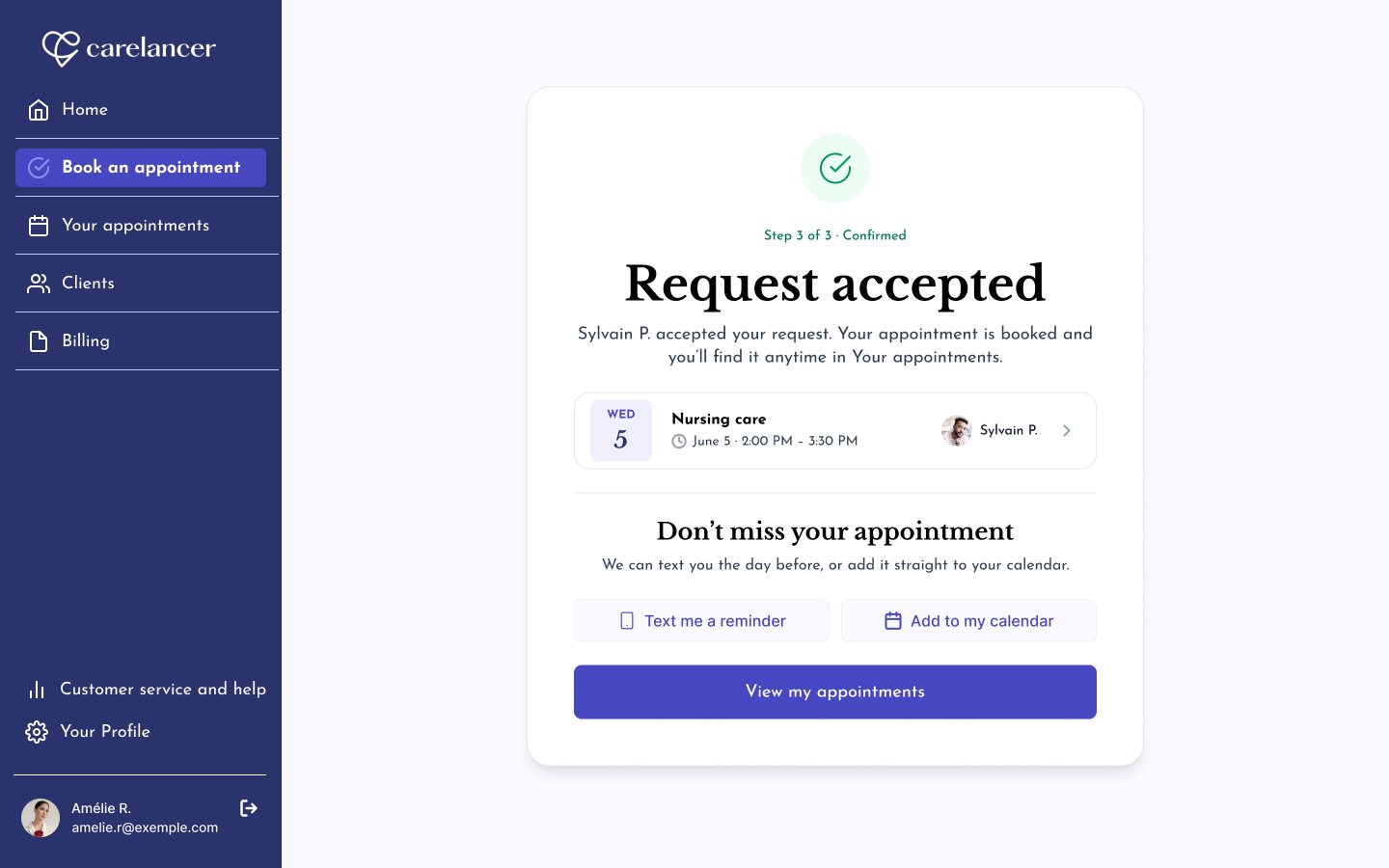
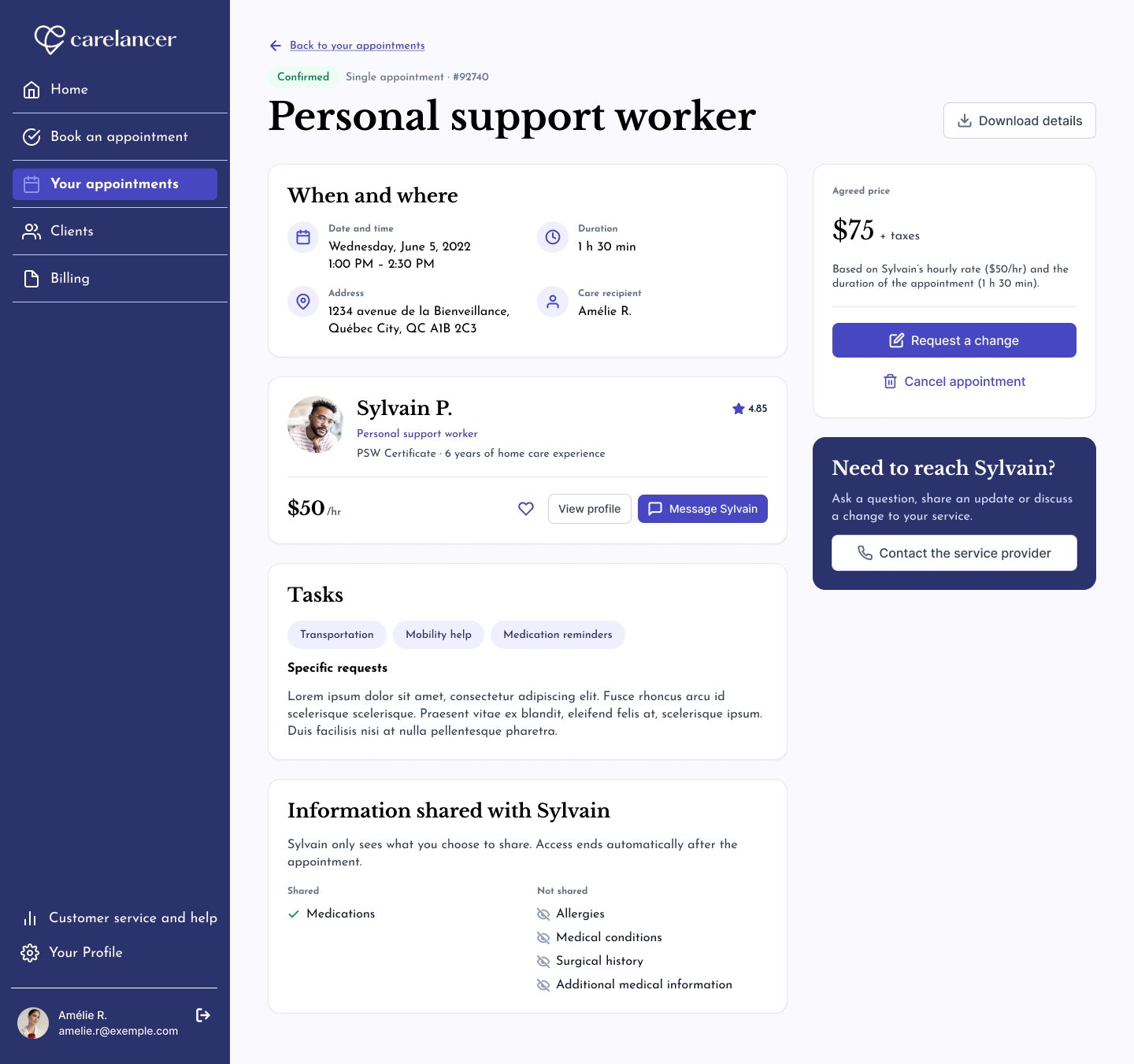
- Structure the whole service. An information architecture tying bookings, appointments, client profiles and billing into one system.
- Map the business. Business analysis and capability mapping to align the product roadmap with the marketplace’s growth model.
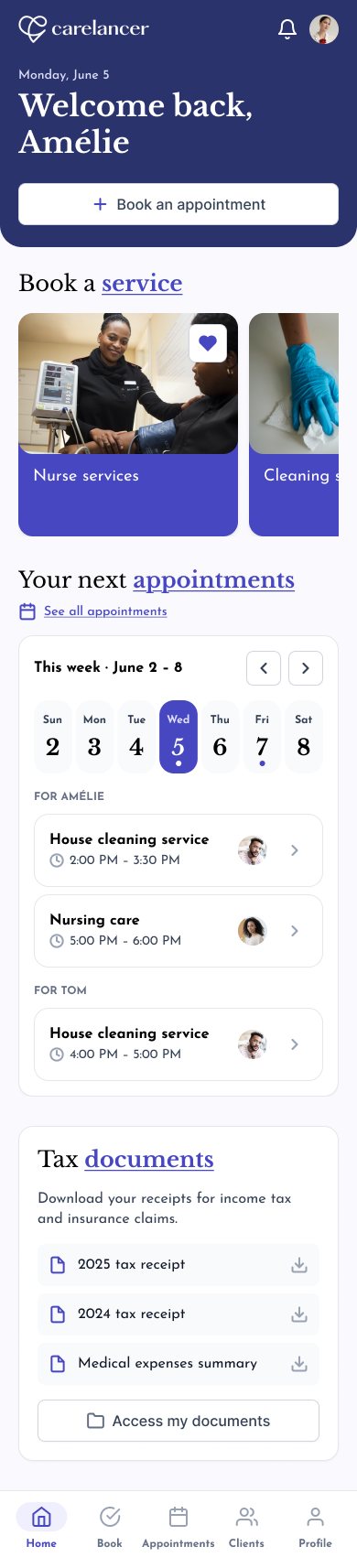
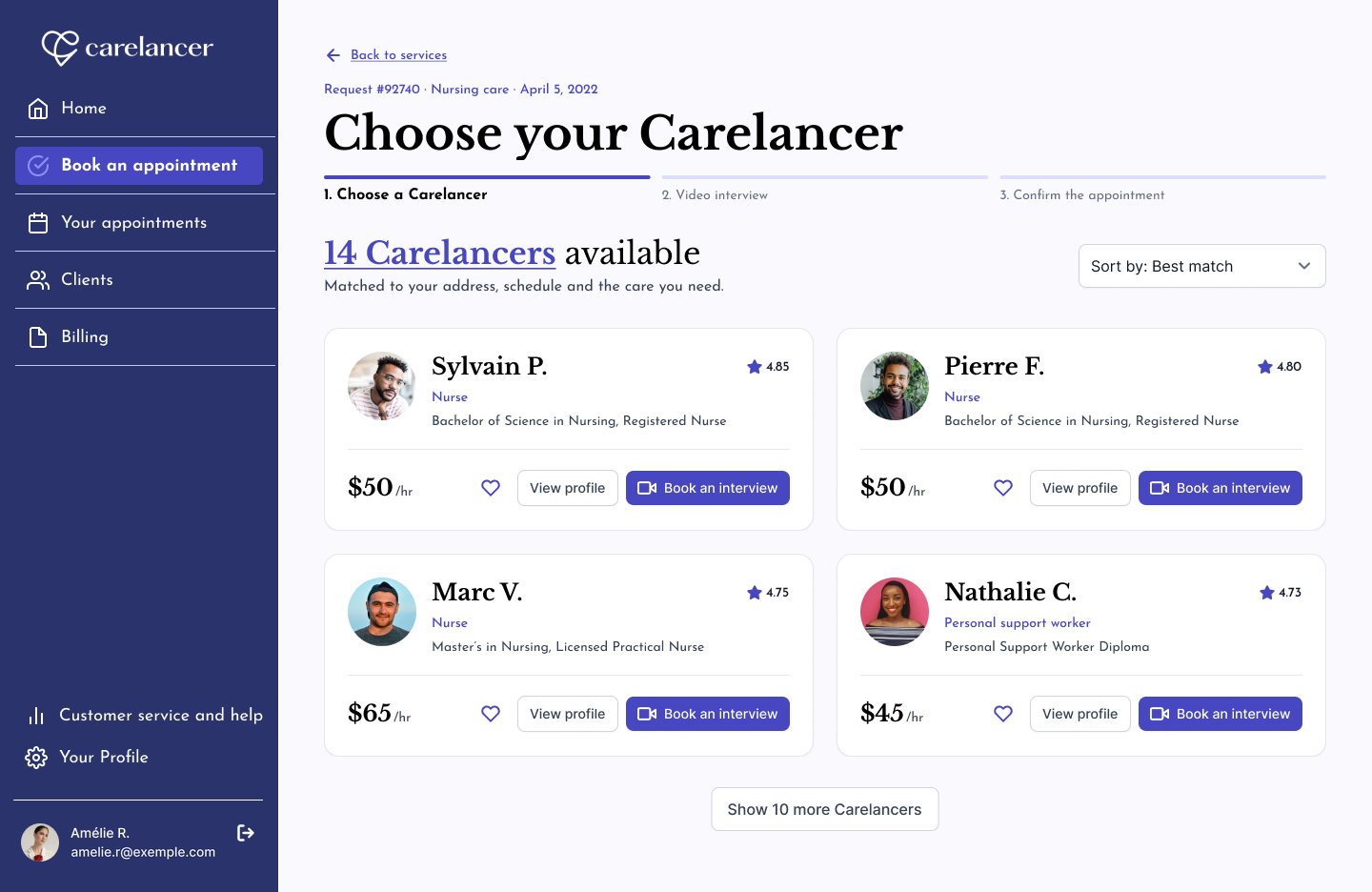
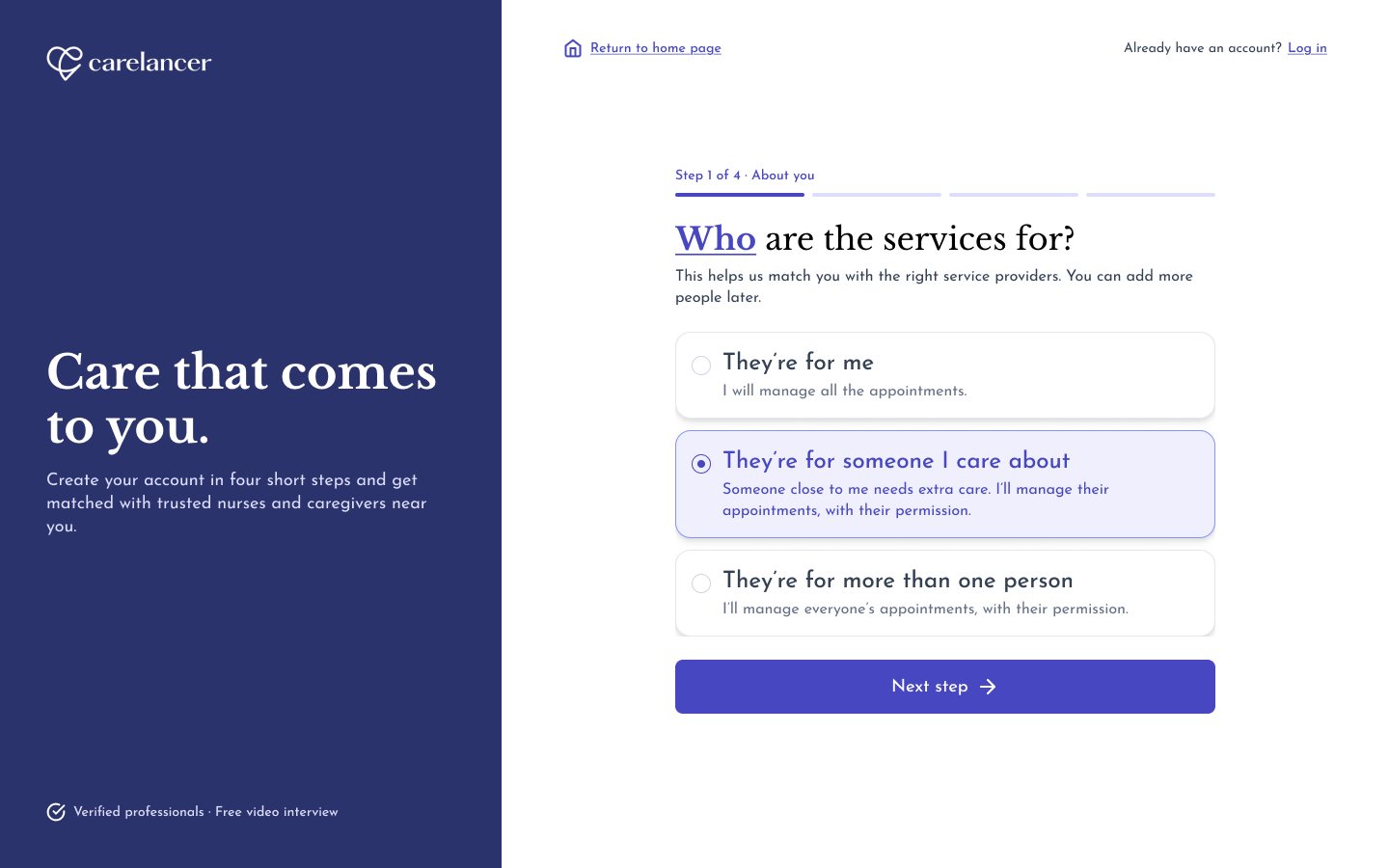
- Design it, then systematize it. Wireframes and a full design system for booking, matching and video interviews, on desktop and mobile. The screens shown here were redrawn in 2026 from the stable version.
How the marketplace works
Two sides with very different jobs, and a platform in the middle doing the boring parts so neither side has to.
- Clients (families and seniors, often a family member coordinating care for a loved one): describe the care needed, compare matched Carelancers, video interview, book, then follow each visit.
- Care providers (nurses, personal support workers, health care aides, home cleaning): get verified (ID, credentials, background check), set rates and availability, accept requests, deliver care and get paid weekly.
- The platform: matching by address, schedule and care, scheduling, video interviews, payments and receipts, vetting and re-verification.
One design system, two screen sizes
Primitive colours feed semantic tokens (background, text, border), so the whole product can change its look without touching a single screen. Every colour, spacing and text style is a Figma variable, shared by desktop and mobile.
The result
Carelancer has been online since 2022 and now serves 19 Ontario communities, from Ottawa to Oshawa, at rates 20 to 30% below agency rates, by the company’s own estimate. A two-sided marketplace that holds because we first decided what mattered, then structured the rest around it.
The team. UX, information architecture and design system: Jean-Sébastien Daigle, &friends. Strategy: Éric Letarte, &friends. UI and graphic design: Stéphanie Lavoie, Sens du style. Product and project management: Maude Vézina and Chrystian Guy, B.Frank. Client: Carelancer.