Aliments du Québec
The Project
Implement the right technologies to scale quickly—without disrupting operations.
- Identify business opportunities enabled by current and emerging technologies.
- Support informed decision-making around technology and organizational structure.
- Improve the customer experience through simpler, more intuitive systems.
- Clarify roles and optimize internal processes.
- Maintain stakeholder alignment throughout the transformation objectives.
Transforming Technology Through the Business Model
Aliments du Québec, a brand well known to Quebec consumers, has experienced rapid growth in recent years.
This accelerated expansion revealed a common paradox: a brand’s success can weaken its foundations when the organization has not yet built the technological capabilities needed to sustain its own evolution.
Processes became inconsistent, and the patchwork of technologies accumulated over the years no longer supported current complexity. It no longer reflected the strategy nor the day-to-day reality of the teams.
To continue fulfilling its mission without losing its way, the organization needed to rethink its technology architecture and ensure it truly supported its business model.
This is where enterprise design comes in.
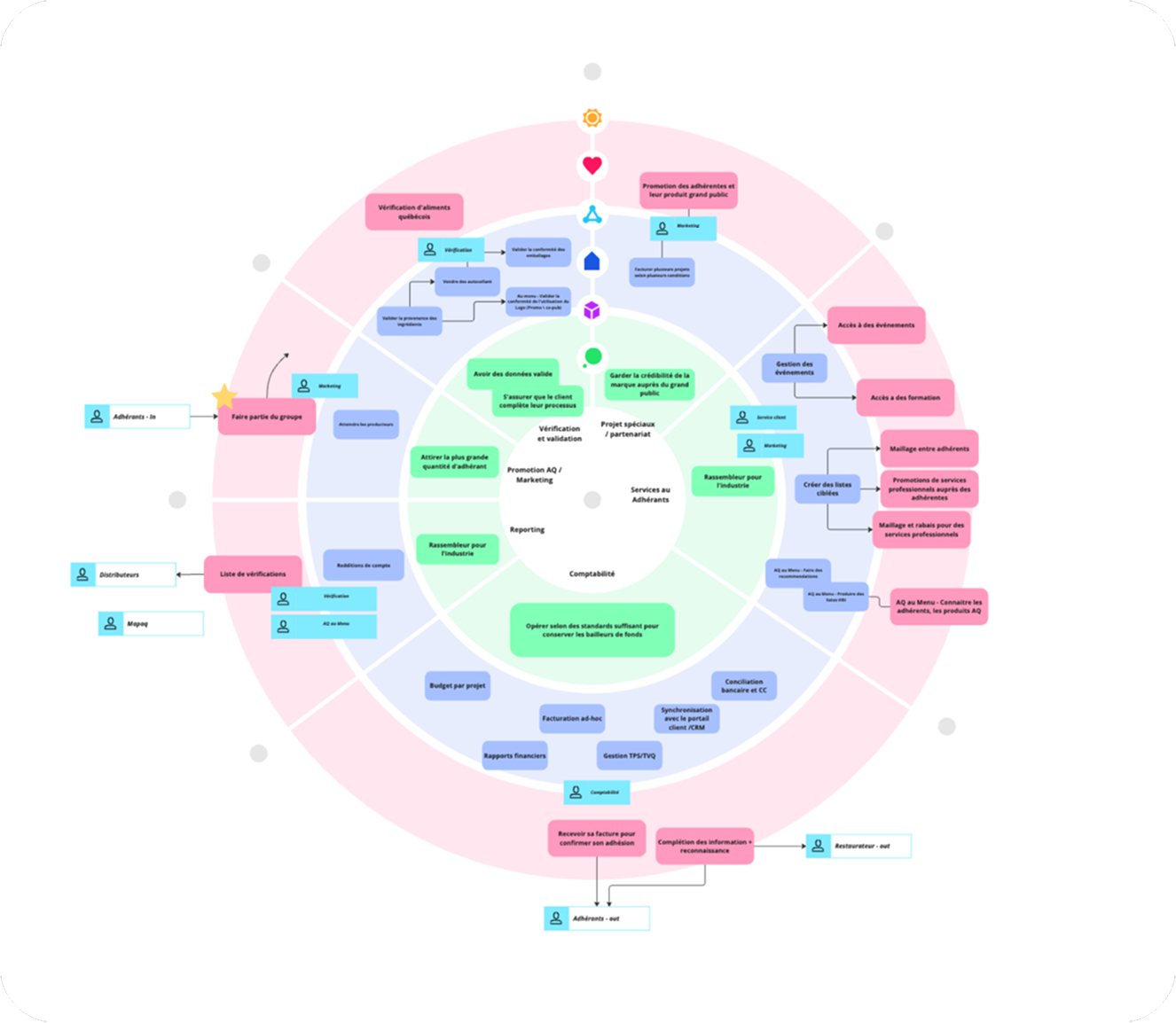
Instead of approaching the transformation as a simple digital shift, we helped Aliments du Québec revisit the foundations of the organization through the EDGY model:
- People (teams and partners),
- Activities (processes and value chain),
- Objects (technologies and tools),
- Outcomes (strategic ambitions and desired impacts).

This systemic reading reconnected strategy with operations, turning technology into a lever rather than a constraint.
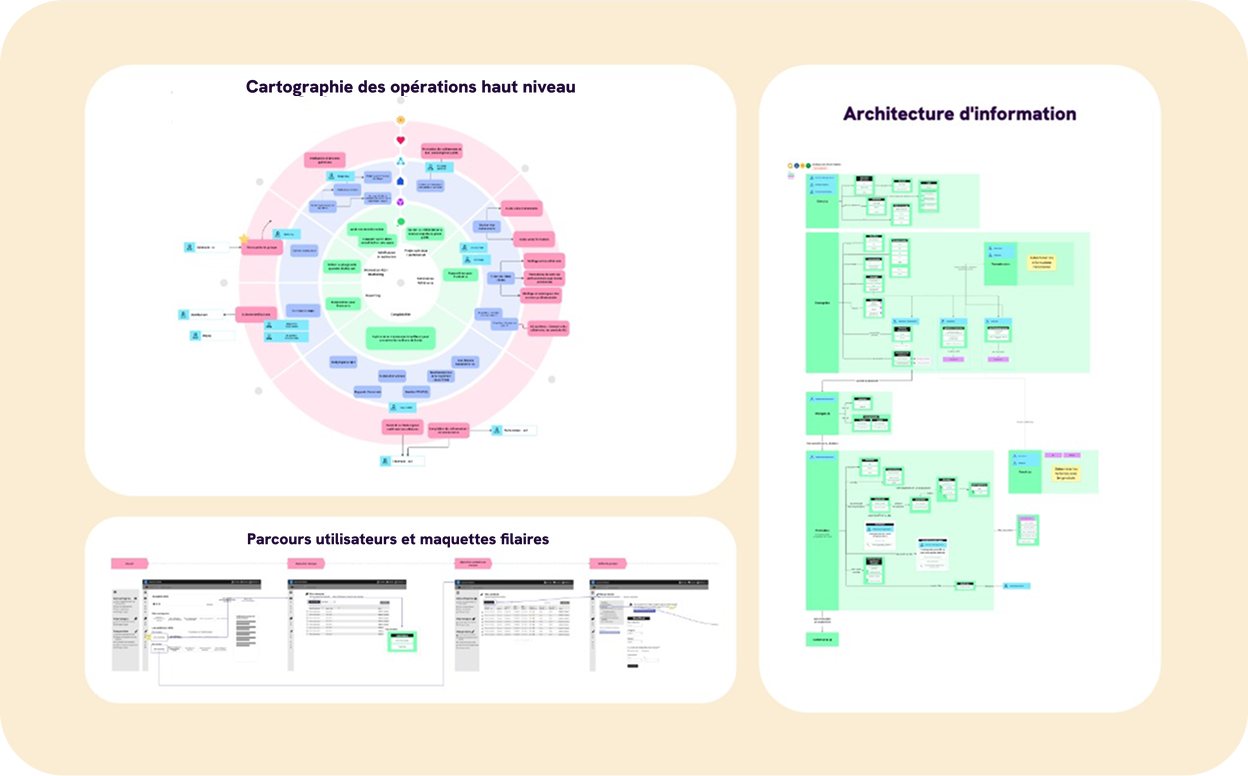
The project began with an enterprise map: we highlighted essential capabilities, critical dependencies, and friction points slowing down decision-making.
From there, a new information architecture emerged—one that was clearer and better aligned with the reality of validating the origin of Québec food products.
The Aliments du Québec team was able to redefine customer journeys and simplify the interfaces between systems.
The organization is now better equipped to grow while preserving what makes it strong: a meaningful brand, rooted in Québec’s territory and supported by a coherent ecosystem.
What we delivered
An enterprise map, redesigned processes, a new information architecture, a sitemap and first wireframes: the foundations the platform needed to keep growing without losing its coherence. Every verified product goes through the workflow this architecture had to support. Spreadsheets were crying.
What happened next
Public milestones from Aliments du Québec and its partners. Their work, not ours, in the direction the architecture pointed to.
- 2021–22: more than 1,550 member companies and 25,000 verified products, up 22% and 15% since April 2020. MAPAQ, May 2022
- End of 2022: about 1,600 member companies, up 25% since April 2020. UPA, April 2023
- April 2026: the product verification process is certified ISO 9001:2015. Every product is still checked one by one, with supporting evidence. Aliments du Québec
- 2026: a new member portal replaces the old one: eligibility check, product submission with proof of origin, real-time tracking, e-signature and online renewals. eXolnet
- Today: more than 30,000 verified products, 1,800 member companies, and some 2,000 restaurants and institutions recognized.
The result
An organization better equipped to grow while keeping what makes it strong: a meaningful brand, rooted in Québec and supported by a coherent ecosystem. When the architecture starts from the business model, technology becomes a lever again.
The team. Enterprise design, information architecture and workshops: Jean-Sébastien Daigle, &friends. Digital transformation and information architecture: Marc Boivin, Force 5. Client: Aliments du Québec.